Introduction
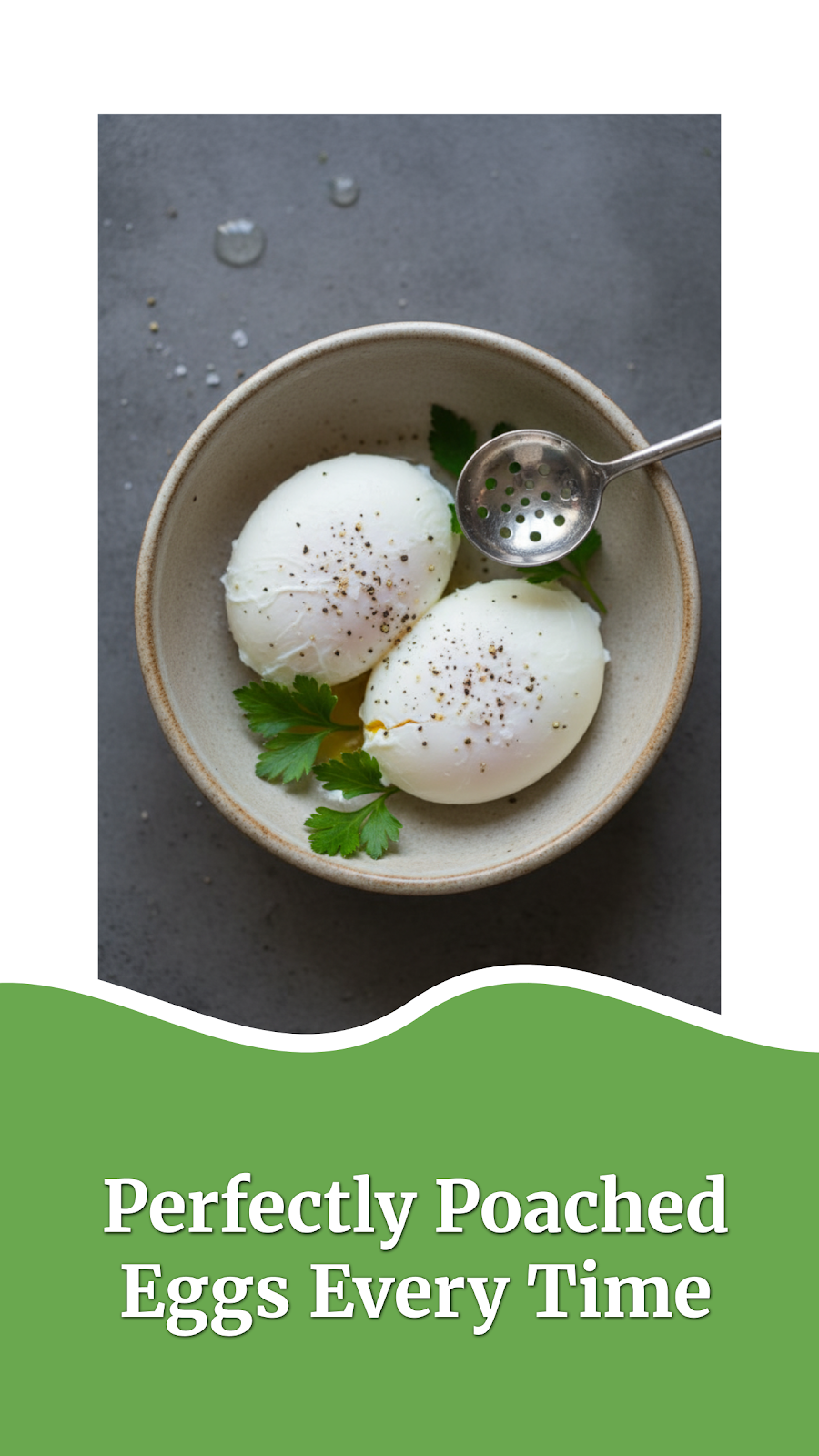
Poached eggs are a delightful addition to a variety of dishes, from breakfast favorites to elegant brunch offerings. Mastering the art of poaching eggs can elevate your culinary skills and impress your guests. This guide will walk you through the essential ingredients and methods for perfectly poached eggs.
Detailed Ingredients with measures
– Eggs: 1 – 6, fridge cold (Note 1)
– Optional: White vinegar or cider vinegar: 2 tbsp (for whirlpool method only, Note 2)
Prep Time
5 minutes
Cook Time, Total Time, Yield
– Cook Time: 3 – 4 minutes
– Total Time: 8 – 9 minutes
– Yield: 1 – 6 poached eggs
To begin poaching your eggs, start by straining them to remove excess watery whites. This ensures a rounder, neater shape once cooked. Next, boil water and adjust the heat so the water stays at a gentle simmer. You can choose between the Easy Method or the Whirlpool Method, depending on your preference and the number of eggs you’re preparing.
For the Easy Method, you will place the eggs gently into the water from a teacup, while the Whirlpool Method requires stirring the water to create a vortex that helps the egg whites wrap around the yolk. Each method has its advantages and can yield delicious, visually appealing poached eggs.
When serving, poached eggs can be enjoyed on toast, over asparagus, or as part of a classic Eggs Benedict. With practice and the right technique, you can make perfect poached eggs that are sure to impress.
Detailed Directions and Instructions
Strain Eggs
Crack an egg into a small strainer set over a bowl or glass. Allow it to sit for 30 seconds, wiggling gently to help the watery whites strain through. Carefully transfer the strained egg into a teacup. Repeat this process for each egg you plan to cook in one batch (maximum of 2 for the Whirlpool method, up to 6 for the Easy Method).
Boil Water Then Reduce Heat
For both methods, fill a pot with water and bring it to a boil over high heat. Once boiling, reduce the heat to maintain a gentle simmer, where tiny bubbles form at the base but large bubbles do not break the surface.
EASY METHOD (FOR 4 TO 6 EGGS)
Fill a pot with 7.5 cm / 3 inches of water. Bring it to a boil, then lower the heat as described. Submerge a teacup into the water and gently roll the egg out onto the pot’s base to minimize the drop distance for a neat shape. Repeat with the remaining eggs, ensuring not to exceed 15 seconds for adding all eggs.
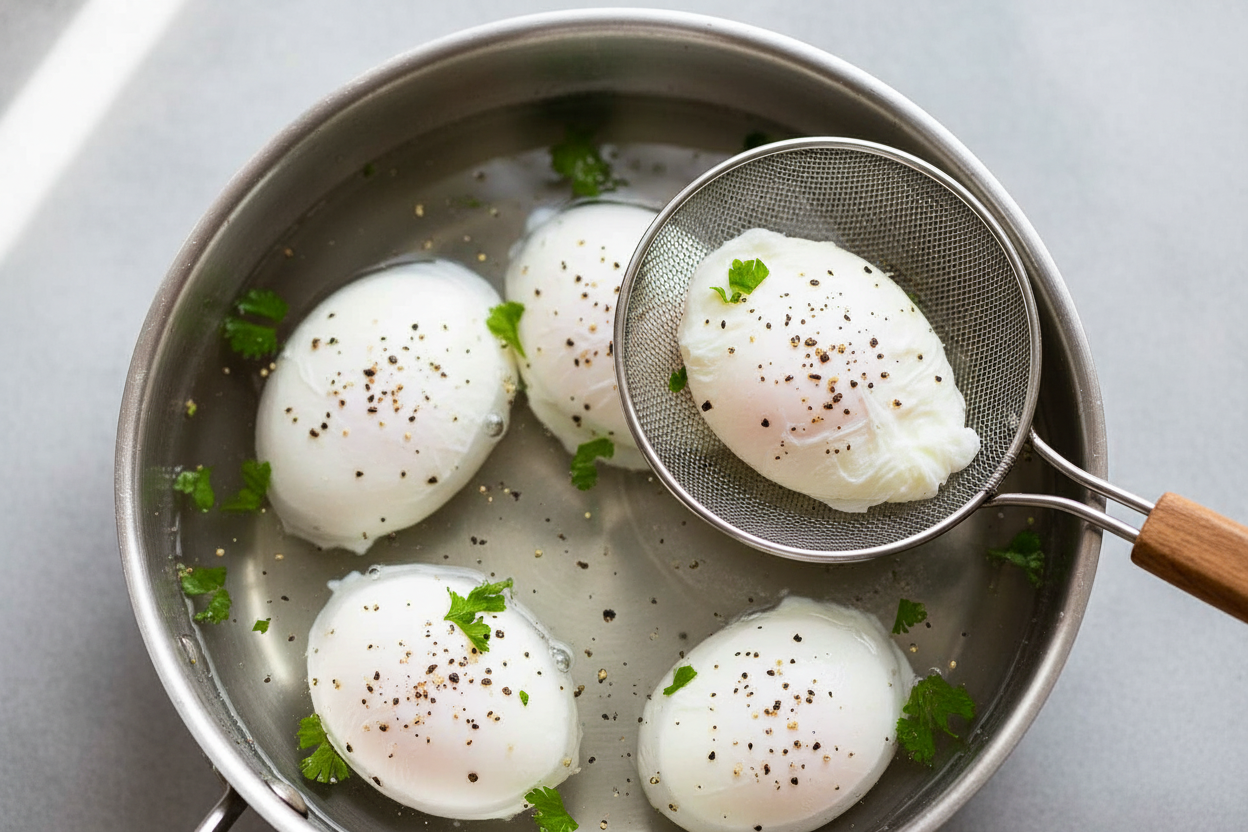
After 20 seconds from adding the first egg, the eggs will begin to set but not be fully cooked. Use a slotted spoon and a tablespoon or dessert spoon to gently turn the eggs upside down, starting with the first egg added and ending with the last. Allow them to cook for an additional minute, then turn again. After another 30 seconds, check one egg for doneness using a slotted spoon; the whites should be soft yet set, and the yolks runny.
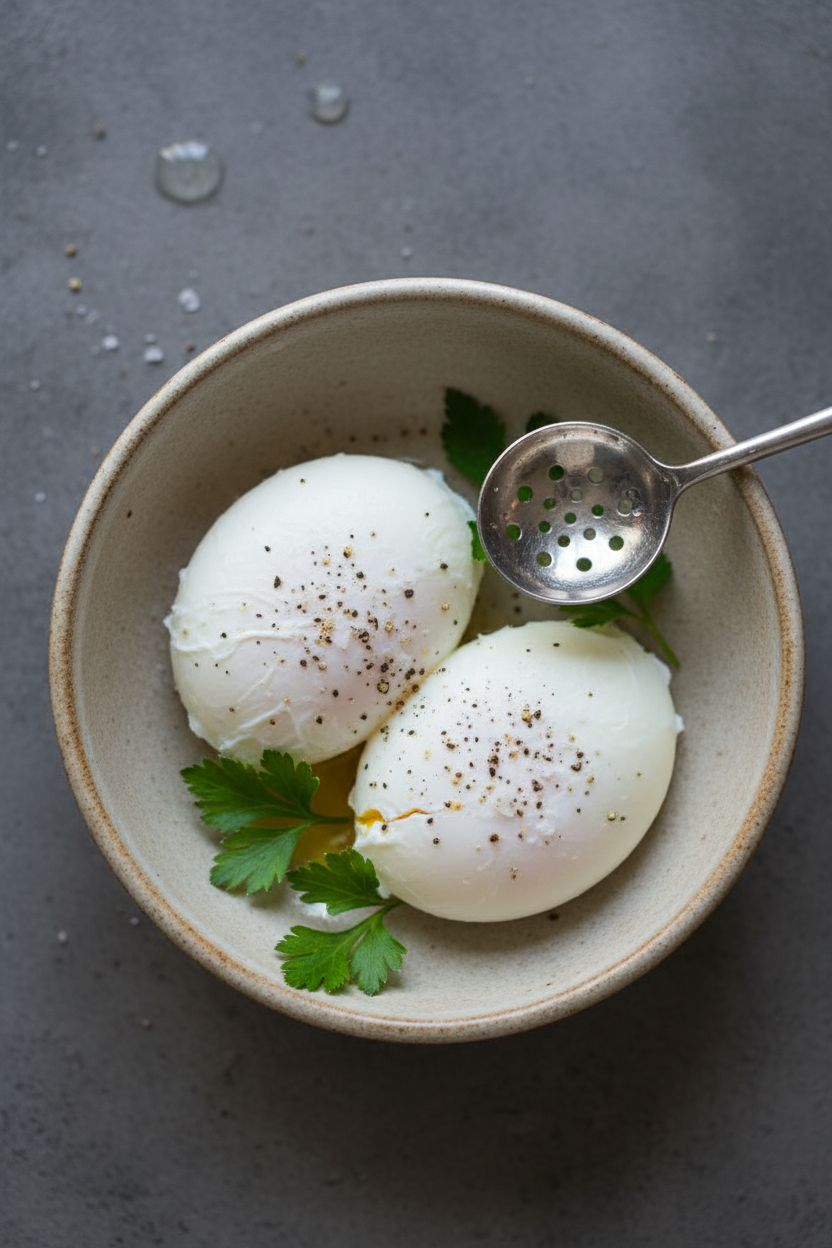
To drain and serve, transfer the eggs onto a paper towel for 15 seconds to dry. Be cautious not to leave them on the towel for too long to prevent sticking. Serve as desired.
WHIRLPOOL METHOD
Fill a large saucepan or small pot with 7.5 cm / 3 inches of water and add vinegar if using. Bring it to a boil and lower the heat as previously instructed. Using the handle of a flat-handled wooden spoon, stir the water quickly in a circular motion to create a whirlpool, maintaining the vortex for 7 seconds.
Carefully slip the egg gently into the center of the vortex, ensuring the teacup is close to the water without touching the surface. The spinning water will help wrap the whites around the yolk as it stops spinning (approximately 15 seconds). Allow the egg to cook for 1 ½ to 2 minutes. After 30 seconds, you can choose to rotate the egg once or swirl the water again.
Using a slotted spoon, lift the egg out and check for doneness; the whites should be soft but fully set while the yolk remains runny. To drain and serve, transfer the egg onto a paper towel for 15 seconds. Serve as desired.
Multiple Eggs
For cooking multiple eggs using the Whirlpool method, increase the water depth to 15 cm / 6 inches. Once the first egg has set after about 30 seconds, you can swirl the water again and drop in another egg. While some experts can manage up to 4 eggs at once, it is recommended to use the Easy Method for better results.
LARGE BATCH POACHED EGGS
To store cooked poached eggs, place them in a bowl of cold water to halt further cooking. If preparing a large quantity, consider using ice water to keep the temperature down. For reheating, bring a new pot of water to the boil, then reduce the heat to low. Transfer the eggs directly from the cold water into the hot water and leave them for 30 seconds to reheat without further cooking. Drain on paper towels before serving.
SERVING
Poached eggs can be served on toast, with avocado spread, atop asparagus, or as part of Eggs Benedict. They also complement homemade baked beans and can be added to Caesar salads.
Notes
Note 1
Fresher eggs yield better poached eggs, as they maintain their structure, resulting in rounder shapes. Older eggs tend to have watery whites, leading to a less tidy appearance when poached. Straining helps achieve better results even with less fresh eggs.
Note 2
Vinegar can slightly assist in keeping egg whites together, but other factors have a more significant impact. It’s optional and will not impart any noticeable taste.
Note 3
Use a large pot for adequate space when poaching eggs. The pot should allow for rolling the eggs without crowding.
Note 4
Ensure that the water is properly boiled before lowering the heat. The perfect temperature should produce tiny bubbles with no large bubbles breaking the surface.
Note 5
To create a proper vortex, stir at a speed that maintains it for 7 seconds. If the vortex spins too quickly, the yolk may separate from the whites, affecting the egg’s appearance.
Note 6
Poached eggs can be safely stored submerged in water in the fridge for up to two days, but they should not be stored longer due to water absorption. Reheat properly as described above.
Note 7
Nutrition information is based on one large egg (approximately 55g / 2 oz).
Cook techniques
Straining Eggs
Crack an egg into a small strainer set over a bowl or glass. Leave for 30 seconds and jiggle around a bit so watery whites strain through. Carefully transfer to a teacup.
Boiling Water
Bring water to a boil over high heat, then turn the heat down to maintain tiny bubbles from the base of the pot without big bubbles breaking the water surface.
Easy Method
Fill a pot with 7.5 cm / 3″ of water. Submerge a teacup to gently roll the egg out onto the base of the pot. Repeat for all eggs within 15 seconds. Use a slotted spoon to gently turn the eggs upside down after 20 seconds and again after 1 minute. Check for doneness by lifting an egg out to see if the whites are soft but set and the yolks are runny.
Whirlpool Method
Fill a pot with 7.5 cm / 3″ of water and add vinegar if desired. Create a whirlpool in the water using a flat-handled wooden spoon. Slip the egg into the middle of the vortex to help form a neat shape. Let it cook for 1.5 to 2 minutes, using a slotted spoon to check for doneness.
Large Batch Poached Eggs
Prepare using either method and place cooked eggs in a large bowl of cold water to stop further cooking. For reheating, transfer eggs straight from cold water into boiling water for 30 seconds.
Serving Suggestions
Serve poached eggs on toast, with avocado, on asparagus, or in Eggs Benedict. They also pair well with baked beans or Caesar salad.
FAQ
What type of eggs are best for poaching?
Fresher eggs are better because they have better structural integrity, resulting in a nicer shape when poached.
Is vinegar necessary for poaching eggs?
Vinegar is optional; it can help keep the egg whites together, but the effectiveness of the cooking technique is more significant.
How do I know if my poached eggs are done?
The whites should be soft but set, while the yolks should remain runny.
Can I poach multiple eggs at once?
Yes, using the Easy Method allows for up to 6 eggs, while the Whirlpool Method can accommodate up to 4 eggs.
How do I store poached eggs?
Store them submerged in cold water in the fridge for up to 2 days. Reheat by placing them in hot water for 30 seconds.
Are poached eggs suitable for freezing?
No, poached eggs are not suitable for freezing due to their porous nature and potential water absorption.
Conclusion
Poached eggs are a delightful addition to many meals, providing a creamy texture and rich flavor. Using fresh eggs and the right techniques ensures perfect poached eggs every time. Whether you prefer the Easy Method or the Whirlpool Method, you can enjoy beautifully shaped poached eggs that elevate your dishes.
Avocado Toast with Poached Eggs
Top your favorite toast with smashed avocado and a perfectly poached egg for a nutritious breakfast option.
Eggs Benedict
Serve poached eggs on toasted English muffins with ham or smoked salmon, drizzled with hollandaise sauce for a classic brunch dish.
Asparagus with Poached Eggs
Pair poached eggs with steamed asparagus and a sprinkle of salt and pepper for a simple, elegant side dish.
Creamy Pasta with Poached Eggs
Add poached eggs to pasta dishes for a luxurious touch, mixing the runny yolk into creamy sauces.
Classic Caesar Salad
Enhance your Caesar salad by adding poached eggs for extra richness and protein.
Baked Beans with Poached Eggs
Serve poached eggs over hot baked beans on toast for a hearty and comforting meal.
Shakshuka with Poached Eggs
Incorporate poached eggs into a spicy tomato sauce for a Middle Eastern-inspired breakfast or brunch.