Introduction
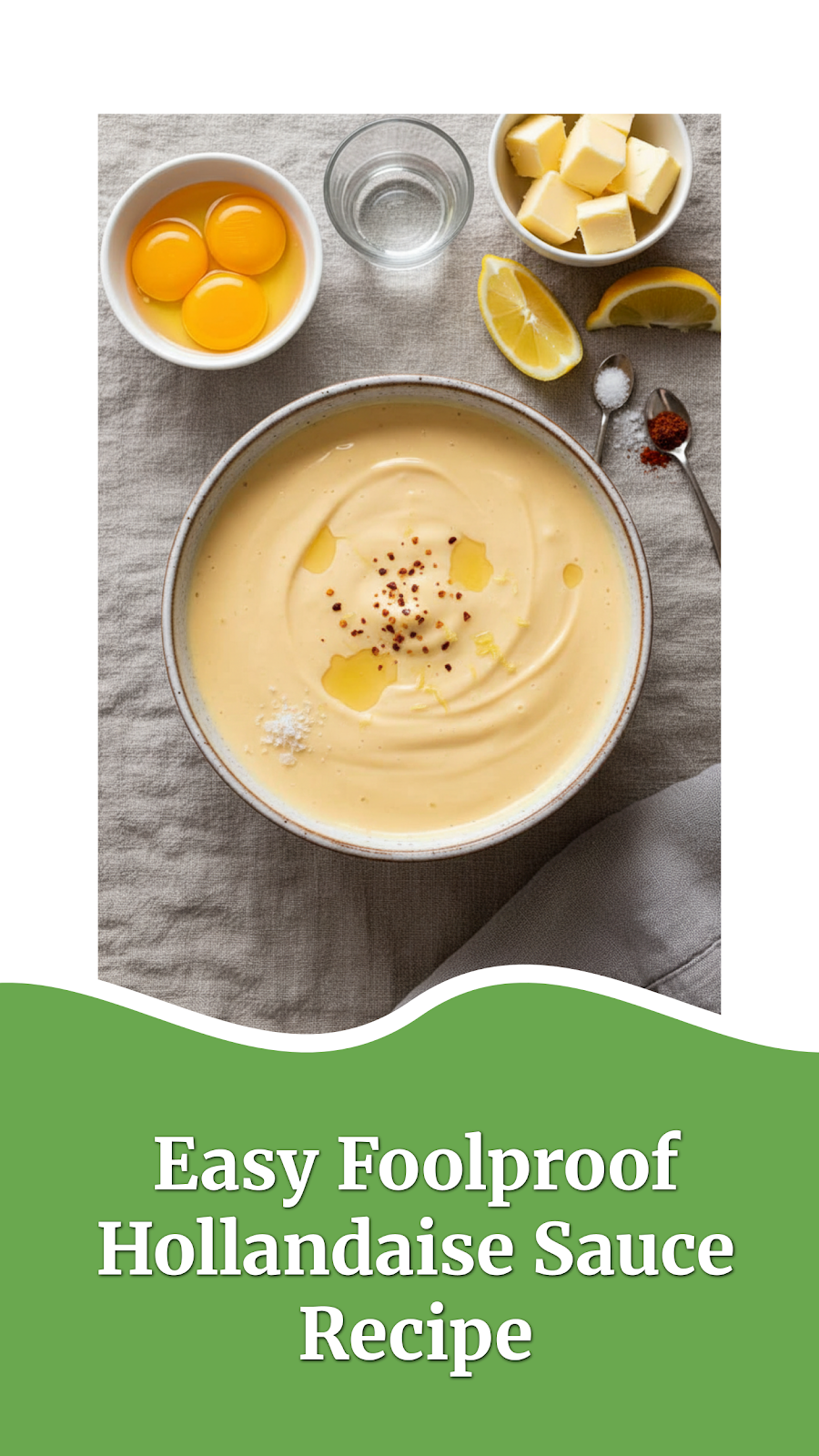
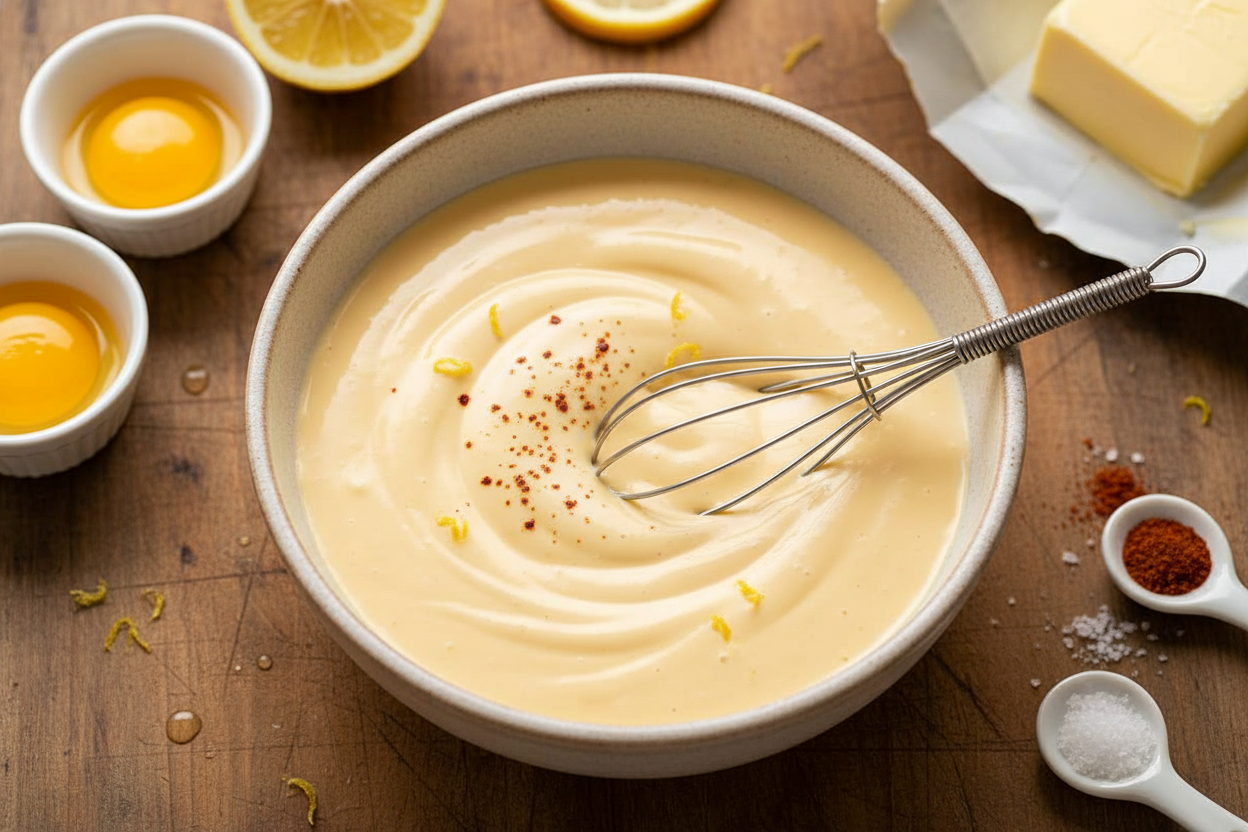
Creating the perfect hollandaise sauce is an art, and the key lies in understanding the ingredients and their roles in the final product. This classic sauce, known for its rich, buttery flavor and creamy texture, is a staple in dishes like Eggs Benedict, drizzling over vegetables, and elevating seafood. Below, we’ll explore the elements that come together to create this culinary delight.
Detailed Ingredients with measures
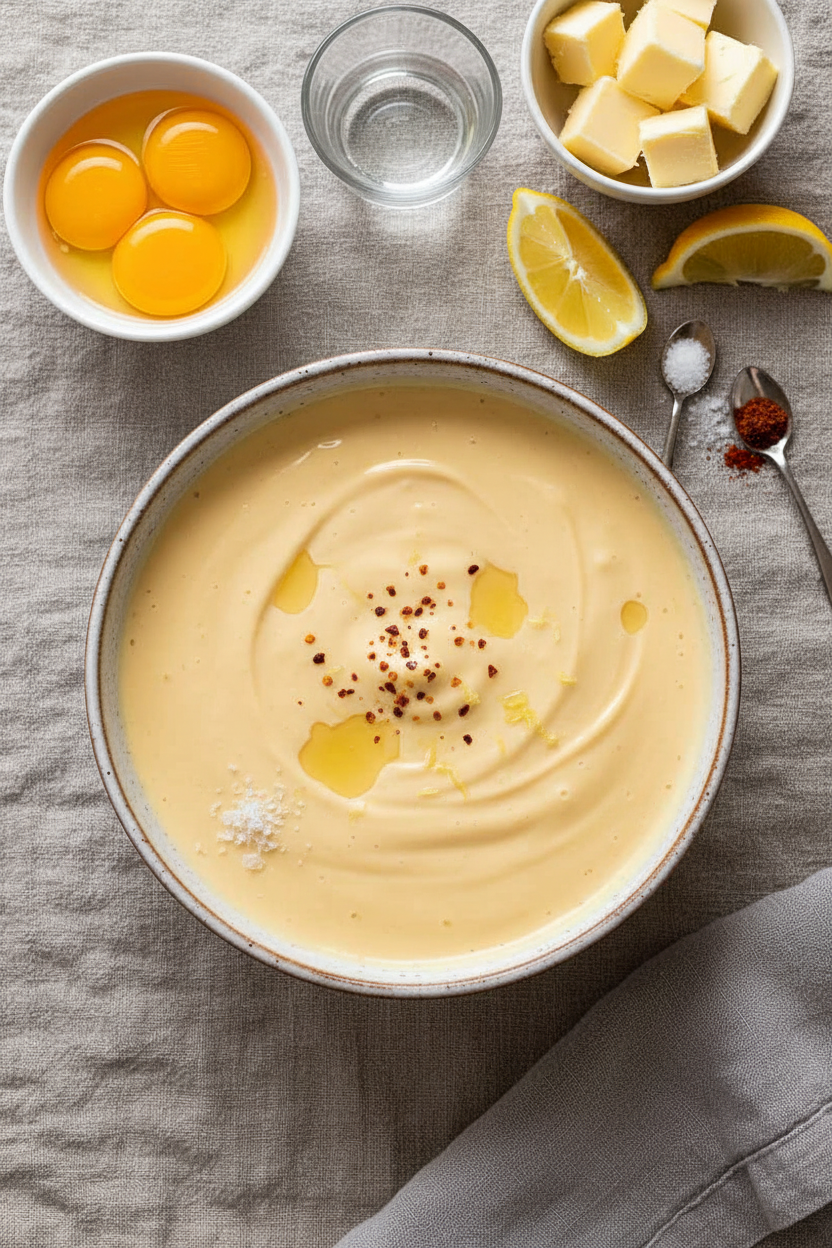
3 egg yolks from large eggs (55-60g / 2 oz each, Note 1)
1/4 tsp cayenne pepper or white pepper
1/4 tsp salt
1 1/2 tbsp lemon juice, plus more to taste
1 1/2 tbsp water
175 g / 1 1/2 sticks unsalted butter, cut into 1.5 cm / 1/2″ cubes (Note 2)
Prep Time
10 minutes
Cook Time, Total Time, Yield
Cook Time: 5 minutes
Total Time: 15 minutes
Yield: Approximately 1 1/4 cups of hollandaise sauce, enough to coat 8 eggs for Eggs Benedict.
The hollandaise sauce begins with fresh egg yolks. The choice of large eggs is important, as they yield about 55-60 grams each, providing enough yolk to achieve the ideal emulsion when combined with butter. Cayenne or white pepper adds a gentle kick, while salt and lemon juice are essential for balancing the rich flavors.
The preparation method is crucial; the egg yolks must be blended with the water, lemon juice, and spices before slowly incorporating melted butter. By allowing the dairy solids in the melted butter to settle, you help ensure a smooth, silky sauce.
This method allows for personalization—adjust the salt and lemon juice levels based on the dish you’re pairing it with. Use immediately for the best flavor, or keep warm to serve later. Understanding the role of each ingredient will help you master this classic sauce, enhancing your culinary creations.
Detailed Directions and Instructions
Step 1: Prepare the Egg Yolks
Place 3 egg yolks in a tall narrow container suitable for an immersion blender, ensuring the blender stick fits all the way to the base.
Step 2: Combine Ingredients
Add 1 1/2 tbsp of lemon juice, 1 1/2 tbsp of water, 1/4 tsp of cayenne or white pepper, and 1/4 tsp of salt to the container. Blitz briefly to combine all the ingredients.
Step 3: Melt the Butter
In a heatproof jug, melt 175g (1 1/2 sticks) of unsalted butter until it is hot. If using a microwave, take care to prevent it from exploding. If using a stove, transfer the melted butter to a jug for blending.
Step 4: Allow Butter to Settle
Let the melted butter sit for about 15 seconds until the milky solids settle at the bottom of the jug.
Step 5: Incorporate the Butter
With the immersion blender running on high, slowly pour the melted butter in a thin stream into the egg mixture over approximately 45 seconds. Aim to leave behind most of the milky solids in the jug (approximately 1 1/2 tbsp).
Step 6: Blend for Texture
Once all the butter is added, the sauce should appear thick, creamy, smooth, and pale yellow in color. Blitz the sauce for an additional 10 seconds, moving the blender stick up and down for an even consistency.
Step 7: Adjust Thickness
If the sauce is too thick, add warm tap water 1 teaspoon at a time until you reach the desired consistency.
Step 8: Adjust Seasoning
Taste the sauce and add extra salt if serving with non-salty foods like asparagus. If pairing with salty items such as Eggs Benedict, steak, or fish, keep the salt as is.
Step 9: Adjust Lemon Flavor
If using the sauce for rich dishes like Eggs Benedict, steak, or salmon, make it slightly more tangy than you prefer, as it will be diluted when consumed. If serving with asparagus, ensure the lemon flavor is to your liking.
Step 10: Serve or Store
Use the sauce immediately or keep it warm until required by covering it and wrapping in a tea towel. It will maintain warmth for about 15 minutes. Rewarm with warm tap water if needed, and serve warm or at room temperature.
Notes
Note 1: Egg Yolks
Separate the egg yolks when they are cold from the fridge for easier handling. Use the shell method or let the whites slip through your fingers into another bowl. Use large eggs weighing 55-60g (2 oz) each for proper emulsification. If necessary, whisk an extra yolk for the required amount.
Note 2: Butter
The milky solids that settle in melted butter should be mostly left behind for optimal flavor. If some is mixed in, it is usually fine, but for a high-quality hollandaise, consider using clarified butter or ghee.
Note 3: Storage
Store leftovers in an airtight container for up to 2 days in the fridge. To reheat, submerge in warm tap water for 20 minutes. Stir and change the water as necessary. Alternatively, transfer to a bowl and cover before placing in warm water.
Note 4: Microwave Method
If you choose to reheat in the microwave, do so in 10-second bursts at a low setting. This method requires careful monitoring to avoid overheating.
Note 5: Serving Quantity
This recipe yields approximately 1 1/4 cups of hollandaise sauce, enough to coat about 8 eggs for Eggs Benedict.
Cook techniques
Separating Egg Yolks
To easily separate egg yolks from whites, use one of two methods: either crack the eggs and pass the yolk back and forth between the broken shells until the whites fall away, or crack the egg into your hand, allowing the whites to slip through your fingers into a bowl below.
Melting Butter
Melt the unsalted butter in a heatproof jug until hot, being cautious not to let it explode if using a microwave. If using the stove, pour it into a jug. Let the melted butter sit briefly to allow the dairy solids to settle at the bottom.
Emulsifying Sauce
With a blender stick running on high, pour the hot butter slowly in a thin stream into the egg yolk mixture over about 45 seconds. This method helps to emulsify the butter with the yolks, creating a thick and creamy sauce.
Adjusting Thickness
If the sauce is too thick, you can adjust its consistency by mixing in warm tap water, one teaspoon at a time until it reaches your desired thickness.
Adjusting Flavor
When using the sauce, consider adding additional salt for non-salty pairings such as asparagus, and increasing the lemon juice for richer foods like steak or salmon to enhance its tanginess.
Keeping Warm
If not used immediately, the sauce can be kept warm by covering it and wrapping it in a tea towel, allowing it to stay warm for about 15 minutes.
FAQ
What type of eggs should I use for this sauce?
Use large eggs that weigh between 55-60g (2 oz). Jumbo eggs will also work, but smaller eggs may not have enough yolks for proper emulsification.
Can I use all the melted butter, including the milky whites?
While you can use all the melted butter, for optimal flavor in a Hollandaise sauce, it’s better to leave behind most of the milky whites that settle at the bottom.
How should I store leftover sauce?
Store leftovers in an airtight container in the fridge for up to 2 days. Reheat by submerging the container in warm tap water or microwaving in low 10-second bursts.
Is this sauce suitable for freezing?
No, Hollandaise sauce is not suitable for freezing.
Can I make this sauce without a blender stick?
It is best to use a blender stick for emulsification, but if needed, you can attempt to whisk very vigorously by hand, although results may vary.
Conclusion
This Hollandaise sauce recipe is a rich, creamy, and versatile addition to many dishes. With the perfect blend of egg yolks, butter, lemon juice, and spices, it can elevate your meals whether served with Eggs Benedict, steamed vegetables, or grilled seafood. Adjust the seasoning and acidity to tailor it to your tastes, ensuring a delicious experience every time.
More recipes suggestions and combination
Eggs Benedict
A classic brunch dish featuring poached eggs over toasted English muffins, topped with this delightful Hollandaise sauce.
Asparagus with Hollandaise
Lightly steamed asparagus spears drizzled with warm Hollandaise make for a sophisticated side dish.
Grilled Salmon
Top a perfectly grilled salmon fillet with Hollandaise sauce for a luxurious touch.
Oven-Baked Potatoes
Serve baked potatoes topped with Hollandaise for a rich and creamy flavor.
Vegetable Frittata
Enhance a vegetable frittata with a dollop of Hollandaise for added creaminess and zest.
Crab Cakes
Pair crispy crab cakes with Hollandaise sauce to elevate their taste and presentation.
Poached Eggs on Spinach
Serve poached eggs on a bed of sautéed spinach, topped with a generous amount of Hollandaise sauce for a nutritious breakfast.