Introduction
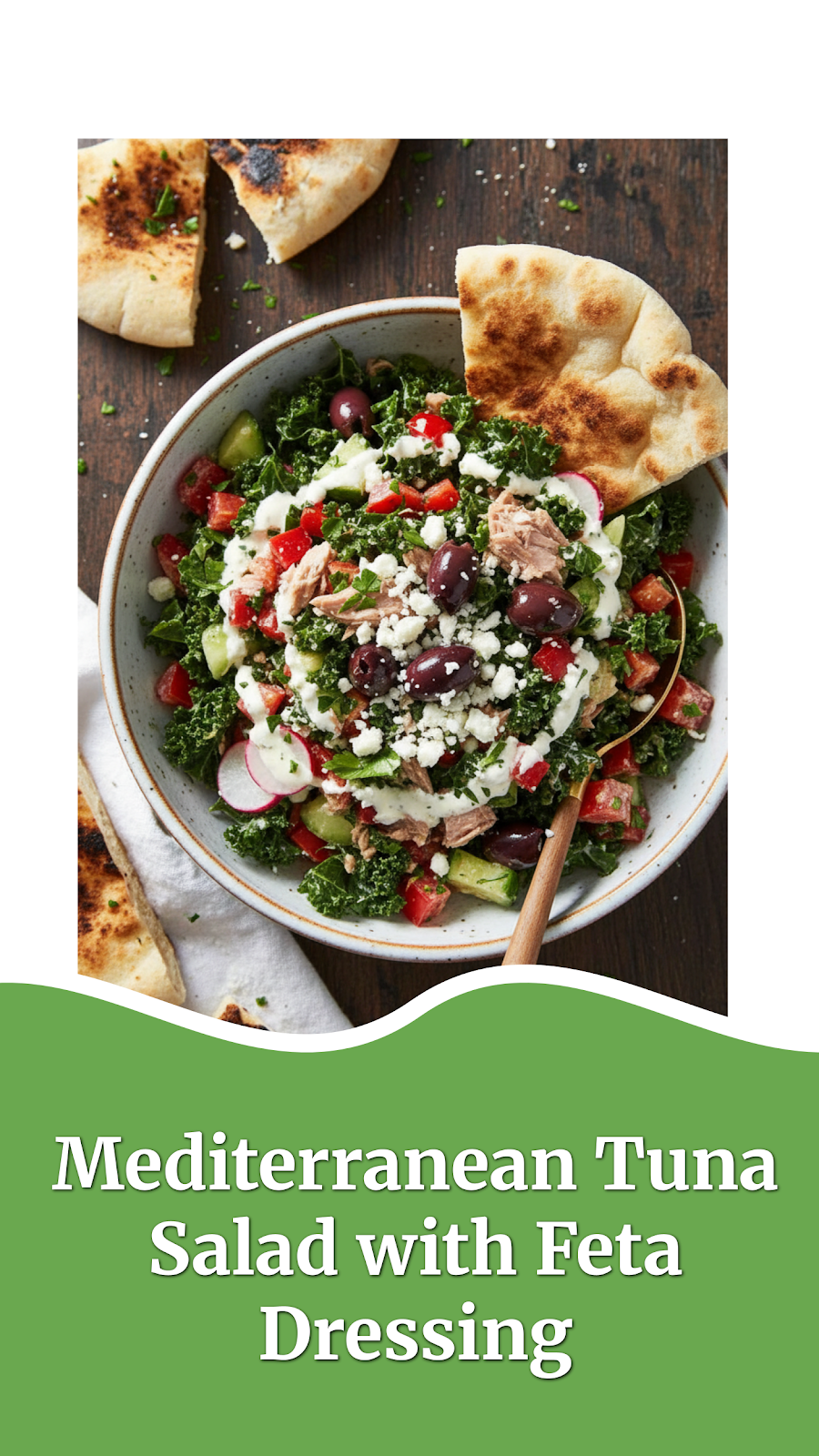
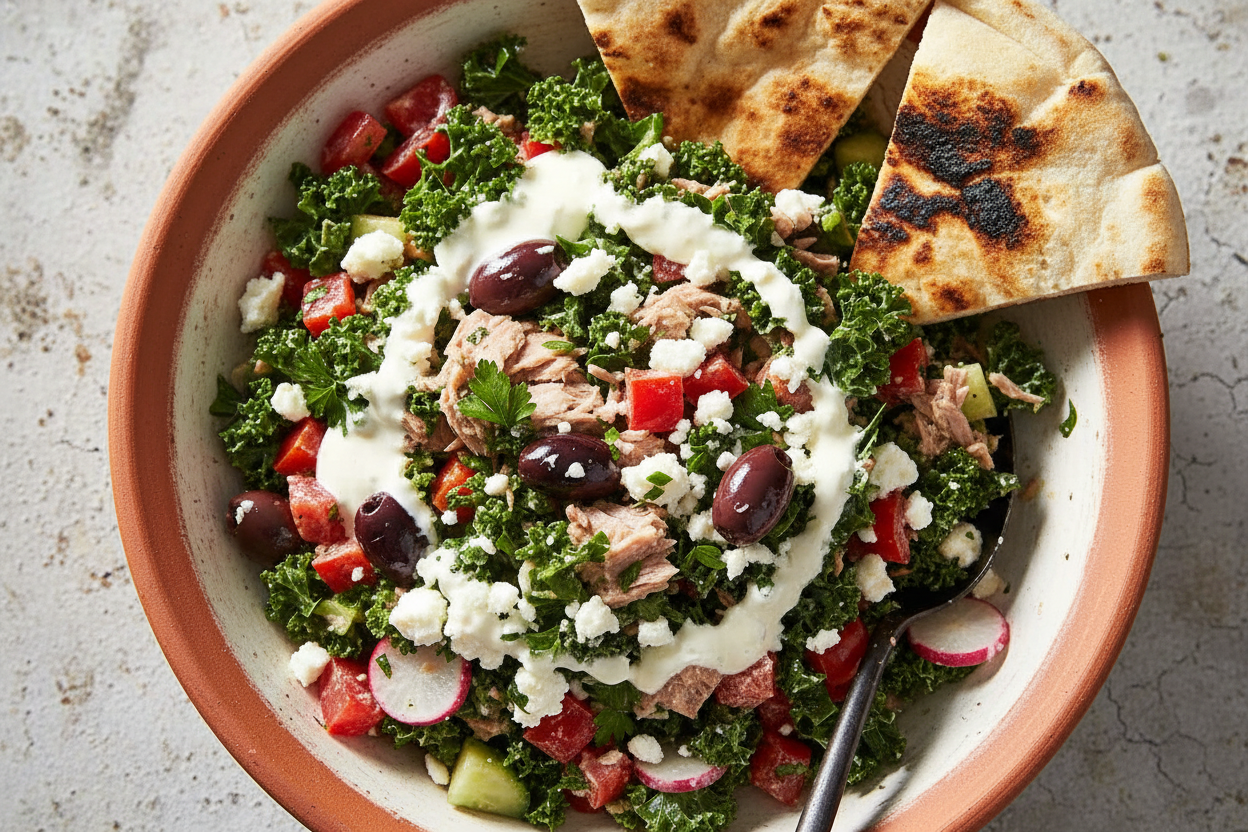
Salad ingredients come together to create a vibrant and nutritious dish that is not only pleasing to the eye but also packed with flavors. This delightful salad features a base of finely chopped curly kale, complemented by juicy tomatoes, crisp bell peppers, refreshing cucumbers, aromatic herbs, and a burst of flavor from canned tuna and feta cheese. With the addition of a creamy feta dressing, this salad becomes a perfect option for a light lunch or dinner.
Ingredients:
Curly kale
3 tightly packed cups finely chopped curly kale (~6 – 7 kale stems)
Tomatoes
2 tomatoes, chopped into 1 cm / 1/3″ squares (include the juices)
Red capsicum / bell pepper
1 red capsicum / bell pepper, chopped into 8mm / 1/3″ squares
Cucumber
1 cucumber, cut lengthwise into 6 or 8 wedges, then chopped into 8mm / 1/3″ pieces
Parsley
1 cup roughly chopped parsley leaves
Red radish
8 red radishes, chopped into 8mm / 1/3″ squares (or substitute with 1 small red onion or 2 green onion stems)
Kalamata olives
1/2 cup whole pitted kalamata olives, cut into quarters
Danish feta
50g / 1.5 oz creamy Danish feta (not crumbly Greek feta)
Canned tuna
425g / 15 oz canned tuna in oil, drained (choose responsibly)
Dressing ingredients:
Danish feta
100g / 3.5 oz Danish feta
Lemon juice
3 tbsp lemon juice
Extra virgin olive oil
4 tbsp extra virgin olive oil
Garlic
1/2 small garlic clove
Cooking salt / kosher salt
1/2 tsp cooking salt / kosher salt
Black pepper
1/4 tsp black pepper
Water
1 tbsp water, if needed
Serving option:
Pita bread pockets, warmed and cut in half
Prep Time
15 minutes
Cook Time, Total Time, Yield
Cook Time: 0 minutes
Total Time: 15 minutes
Yield: Serves 4
Detailed Directions and Instructions
Dressing Preparation
1. Gather all dressing ingredients except for the water.
2. Place the ingredients into a jug that is just large enough to accommodate the head of a stick blender.
3. Use the stick blender to blend the ingredients until they reach a smooth consistency.
4. If needed, add water one teaspoon at a time until the dressing has a thick, drizzle-able consistency. Be cautious not to dilute the flavor too much.
5. Taste the dressing and adjust the salt according to your preference, as feta saltiness can vary by brand.
Salad Assembly
1. In a large bowl, combine all the salad ingredients except the feta and tuna.
2. Pour the prepared dressing over the salad mixture.
3. Toss the salad to ensure all ingredients are well mixed.
4. Crumble the feta into the salad and gently toss again. Expect some smearing of the feta, which adds to the flavor.
5. Add the drained tuna and gently toss, ensuring some chunks remain intact rather than breaking it into tiny pieces.
6. Taste the salad and add more lemon juice if desired, keeping in mind that the tuna can handle a tarty flavor.
Serving Suggestions
1. Serve the salad in bowls, providing spoons for easy serving.
2. Optionally, warm pita bread pockets, cut in half, can be placed on the side or used to stuff the tuna salad, which enhances the overall enjoyment.
Notes
Kale Preparation
1. When chopping kale, aim to finely chop it similarly to how parsley is prepared for tabbouleh or garnishing.
2. Curly kale is preferred as it is easier to chop, provided it is fresh. If unavailable, Tuscan kale can be a suitable alternative.
3. To prepare, strip the leaves from the tough stem, discard the stem, and tightly bundle the leaves before chopping finely. Use a food processor if necessary, although this may yield smaller pieces.
Danish Feta Usage
1. Use creamy Danish feta for the dressing, as it blends smoothly. If Greek feta is used, expect a longer blending time to achieve a creamy consistency. A dollop of yogurt can also help.
Tuna Selection
1. Choose tuna packed in oil for better flavor compared to tuna in brine or spring water.
2. Look for sustainable options like pole and line caught skipjack tuna, avoiding bluefin and bigeye tuna. Refer to canned tuna guides for more sustainable choices.
Extra Flavor Options
1. The salad gets its flavor from the tuna, so the dressing itself doesn’t require intense flavors. However, if using it for a side salad, consider adding:
– 2 tablespoons finely chopped fresh dill
– 1/8 to 1/4 teaspoon finely chopped raw garlic (use cautiously)
– 1/2 teaspoon dried oregano
– Extra salt as desired.
2. Leftovers can last for two days as kale remains sturdy, though it may release some water from the tomato and cucumber. For added thickness, increase the feta in the dressing and omit the water for a mayo-like consistency.
Cook techniques
Chopping Kale
To chop kale, hold the stem and strip the leaves off by running your hand up the stem. Discard the tough stem, then tightly bundle the leaves and finely chop them similar to parsley. This can also be done using a food processor for quicker results.
Preparing Vegetables
Chop tomatoes, capsicum, cucumber, and radishes into uniform sizes, approximately 1 cm (1/3 inch) squares for even distribution in the salad.
Making the Dressing
Combine all dressing ingredients (except water) in a jug suitable for a stick blender. Blend until smooth. Adjust consistency with water, adding 1 tsp at a time until a drizzle-able texture is achieved.
Tossing the Salad
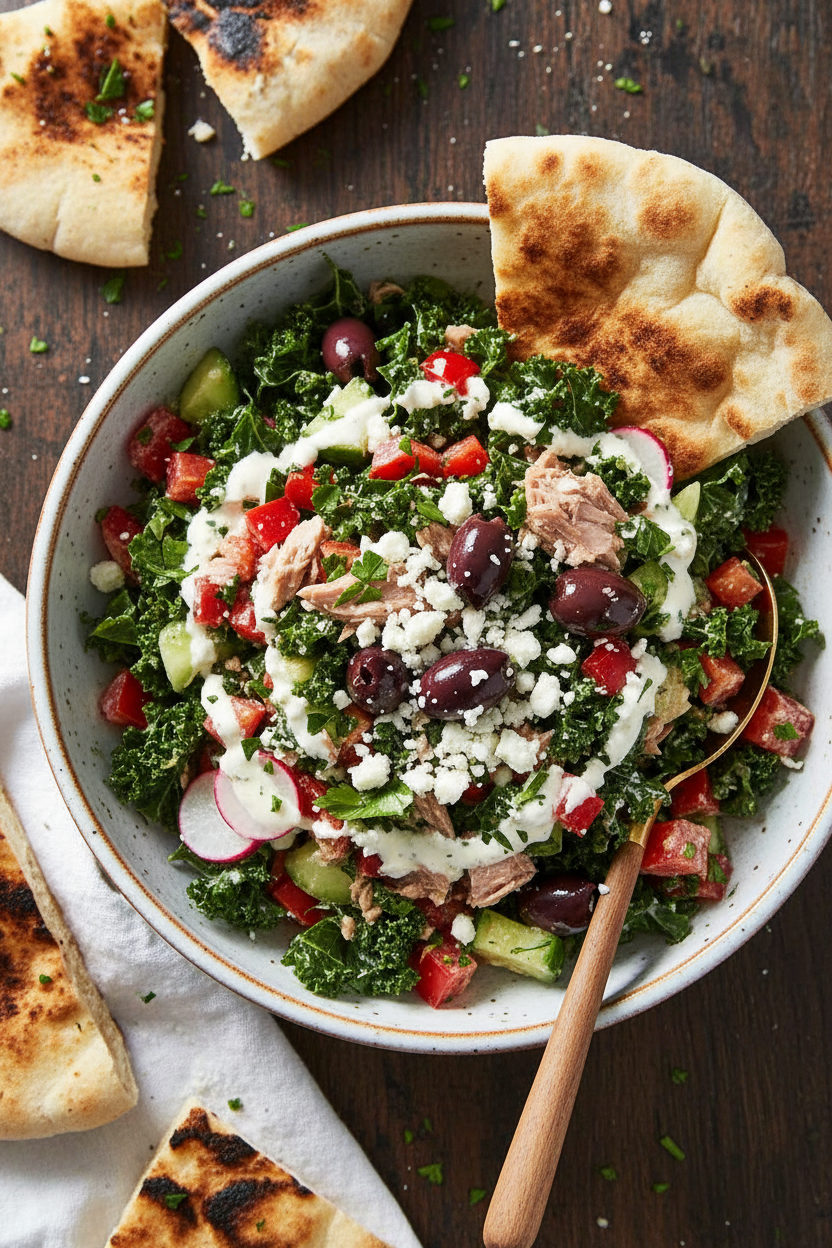
In a large bowl, combine the salad ingredients excluding the feta and tuna. Drizzle with dressing, then toss to combine. Crumble feta over the salad, toss again gently, and add the tuna while keeping some chunks intact.
Serving Suggestions
Serve the salad in bowls, accompanied by warm pita bread pockets. Optionally, stuff the salad into the pita for an enjoyable meal.
FAQ
Can I use a different type of greens instead of kale?
Yes, you can substitute kale with baby spinach, cabbage, or other sturdy greens that can be finely chopped.
What kind of feta should I use for the dressing?
Use creamy Danish feta for easy blending in the dressing. Greek feta can be used but may require more blending and could benefit from a dollop of yogurt for creaminess.
How can I make the dressing more flavorful?
Add fresh herbs like dill or a pinch of dried oregano. Adjust salt levels to taste for added flavour.
How long will the leftovers last?
Leftovers can last up to 2 days due to kale’s sturdy nature, but the salad may become slightly watery from the tomato and cucumber juices.
What is the best type of tuna to use?
Choose tuna in oil for better flavor, opting for sustainably sourced options like pole and line caught skipjack tuna when available. Avoid bluefin and bigeye tuna.
Conclusion
This vibrant kale salad with tuna is not only nutritious but also incredibly versatile. The combination of fresh vegetables, creamy feta, and the savory taste of tuna creates a refreshing dish perfect for any occasion. The dressing enhances the flavors, making it a delightful meal on its own or as a side dish. Enjoy the balance of textures and tastes, and feel free to customize it to suit your palate.
More recipes suggestions and combination
Quinoa Greek Salad
Combine cooked quinoa with cherry tomatoes, cucumber, red onion, parsley, olives, and feta for a protein-packed Mediterranean dish.
Chickpea and Avocado Salad
Mix chickpeas, diced avocado, cherry tomatoes, red onion, cilantro, and lime dressing for a satisfying and creamy salad.
Roasted Vegetable and Farro Bowl
Toss roasted seasonal vegetables with cooked farro, kale, and a lemon-tahini dressing for a warm and hearty meal.
Caprese Salad
Layer fresh mozzarella, tomatoes, and basil leaves, drizzling with balsamic reduction and extra virgin olive oil for a classic Italian dish.
Asian Noodle Salad
Combine cooked rice noodles with cabbage, carrots, bell peppers, green onions, and a sesame-peanut dressing for a crunchy and flavorful option.
Beet and Goat Cheese Salad
Mix roasted beets, mixed greens, goat cheese, and walnuts with a balsamic vinaigrette for a sweet and tangy flavor combination.
Cauliflower Tabbouleh
Use finely grated cauliflower instead of bulgur wheat, mix with parsley, tomatoes, cucumbers, and lemon juice for a gluten-free tabbouleh alternative.