
Introduction
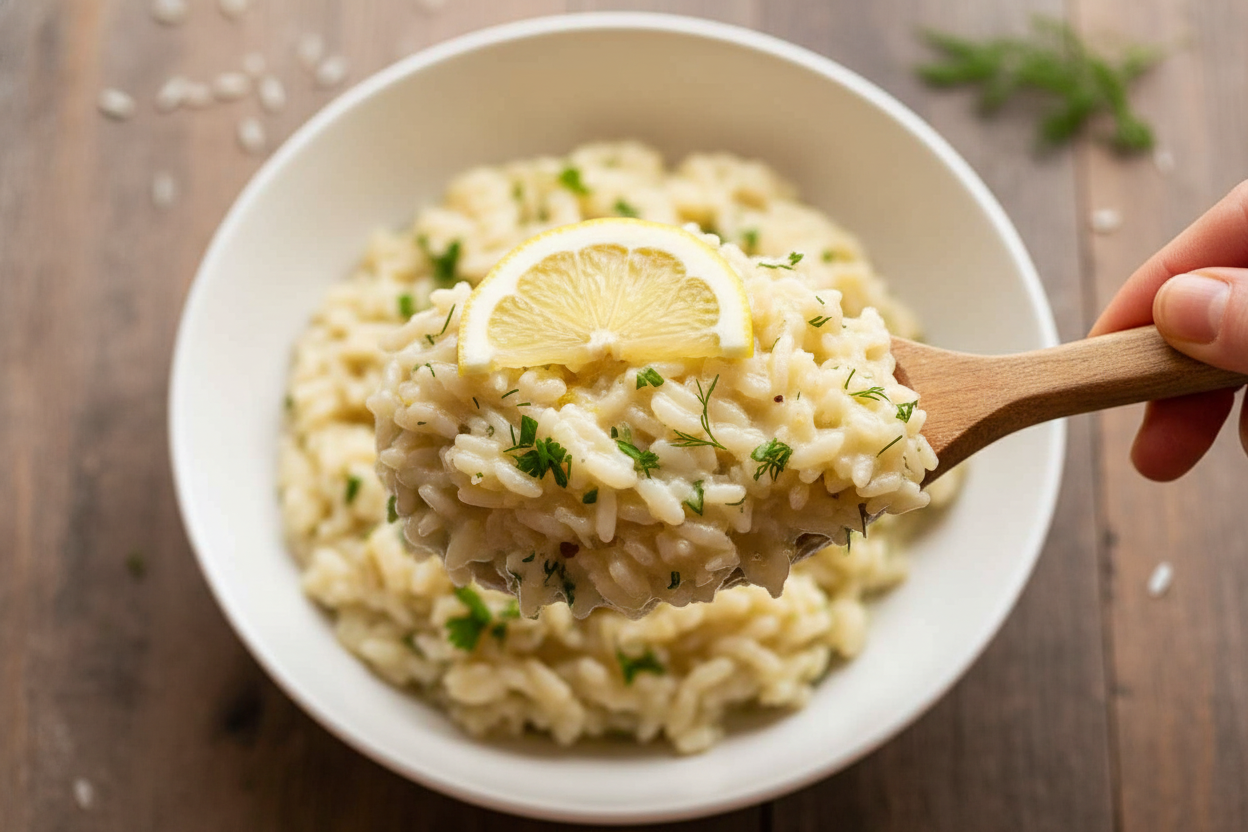
Risotto is a classic Italian dish known for its creamy texture and rich flavor. Made with Arborio rice, it is versatile and can be enhanced with various ingredients, making it a perfect choice for any occasion. This article will take you through a simple risotto recipe, including the essential ingredients and instructions to achieve that delectable creaminess that risotto is famous for.
Detailed Ingredients with Measures
1 1/2 cups Arborio risotto rice
4 cups chicken stock (low sodium) or vegetable stock
1/2 onion, finely diced (brown, white, or yellow)
1 garlic clove, finely minced (large)
30g/2 tbsp unsalted butter, cut into 1.5 cm/1/2″ pieces
1/2 tsp black pepper
Finishing Ingredients:
1/3 cup parmesan cheese, finely grated (store bought pre-grated is fine)
30g/2 tbsp extra unsalted butter, cut into 1.5 cm/1/2″ pieces
Lemon Herb Flavor (Excellent with fish and prawns):
2 tsp lemon rind (from 1 lemon)
2-3 tbsp lemon juice
1 tbsp parsley, finely chopped
2 tbsp chives, finely chopped
3 tbsp dill, finely chopped
Prep Time
10 minutes
Cook Time, Total Time, Yield
Cook Time: 35 minutes
Total Time: 45 minutes
Yield: Serves 4
By following these straightforward steps and using the specified ingredients, you will create a deliciously creamy risotto that can be enjoyed on its own or as a side to your favorite dishes. Serve immediately for the best experience, and feel free to experiment with additional herbs and flavors to suit your palate!
Detailed Directions and Instructions
Preheat the Oven
Preheat your oven to 180°C/350°F. Ensure this temperature is reached before placing any ingredients inside.
Heat the Stock
In a saucepan or microwave-safe container, heat the low sodium chicken stock until it is just before boiling. This will ensure a smooth cooking process.
Combine Ingredients in Casserole Dish
Take a small casserole pot that is approximately 24cm/10″ wide. Pour the heated chicken stock into the pot. Next, add the Arborio risotto rice, diced onion, minced garlic, unsalted butter, and black pepper into the same pot.
Bake the Risotto
Cover the casserole dish with a lid or aluminum foil. Place it in the preheated oven and bake for 35 minutes. The risotto should be tender but not mushy; it will still appear liquidy, which is desirable for a creamy texture.
Stir the Risotto
After 35 minutes, remove the dish from the oven. Stir the rice vigorously a few times to help break it up. Add the additional unsalted butter and finely grated parmesan cheese.
Achieve Creaminess
Continue to stir vigorously until the liquid becomes creamy and mostly absorbed. The goal is for the risotto to be oozy and creamy, not thick or gluey. If it becomes too thick, gradually add boiling water, one tablespoon at a time, stirring well after each addition to loosen it.
Taste for Seasoning
Taste the risotto for salt and adjust the seasoning as necessary. It should be just right for most palates.
Serve Immediately
Serve the risotto while it is still hot and creamy. Optionally, top with additional parmesan cheese if desired.
Lemon Herb Flavouring Option
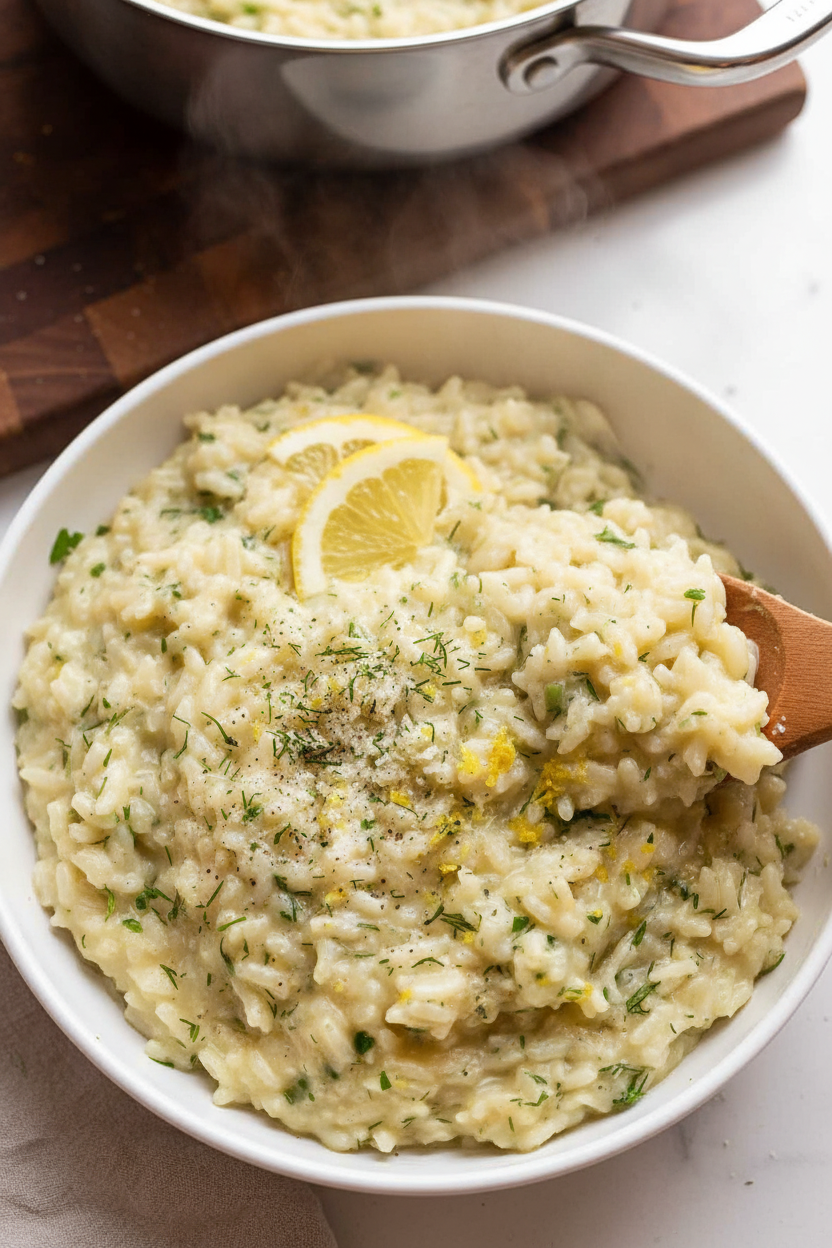
If you choose to enhance the dish with lemon and herbs, add the lemon rind, lemon juice, chopped parsley, chives, and dill just before serving. Stir these ingredients through gently.
Notes
Risotto Rice
Arborio rice is the preferred choice for making risotto due to its high starch content, which contributes to the creaminess without the need for cream. Look for it in the rice section of grocery stores.
Pot/Pan Size
A 20cm/8″ square pan can also be used as an alternative. Make sure to avoid using a wide, large pan, as this may spread the risotto too thin and risk drying it out. Adjust the pot size as needed if you scale the recipe up or down.
Extra Butter for Finishing
You can skip the optional extra butter for finishing if you want to reduce fat, but do not skip the butter used during cooking, as it is crucial for sautéing the onion and garlic effectively.
Herbs
Feel free to use any Western herbs of choice. As they are added at the end, taste as you go along and adjust according to your preference.
Storage and Reheating
This risotto can be stored for up to 4 days in the refrigerator and reheated in the microwave. If needed, add a touch of water to loosen it during reheating. Be aware that the herbs may lose some color, and the lemon flavor may fade, so consider adding a fresh splash of lemon juice when serving.
Cook techniques
Choosing the Right Rice
Using Arborio risotto rice is essential as it has a higher starch content, which contributes to a creamy texture without needing additional cream.
Preheating the Stock
Heating the chicken or vegetable stock before adding it to the risotto helps maintain a consistent cooking temperature, ensuring even cooking of the rice.
Baking Method
Baking the risotto in the oven allows for an even distribution of heat and prevents the need for constant stirring, simplifying the cooking process.
Stirring for Creaminess
After baking, stirring vigorously helps incorporate butter and cheese, transforming any remaining liquid into a creamy consistency.
Adjusting Consistency
If the risotto turns out too thick, adding boiling water a tablespoon at a time can help achieve the desired oozy and creamy texture.
Finishing Touches
Adding extra butter and grated parmesan at the end enriches the flavor and enhances the creaminess of the risotto.
Herb and Citrus Enhancement
Introducing fresh herbs and lemon juice just before serving lifts the flavor profile, making the dish vibrant and refreshing, especially with seafood.
FAQ
Can I use different types of rice for risotto?
While Arborio rice is recommended for its creamy texture, other short-grain varieties like Carnaroli or Vialone Nano can also work well.
How long can I store leftover risotto?
Leftover risotto can be stored in the fridge for up to four days. Reheat it in the microwave, adding a splash of water if necessary to restore creaminess.
Is it necessary to use homemade stock?
Using low-sodium store-bought chicken or vegetable stock is perfectly fine and saves time while still producing a delicious risotto.
Can I reduce the amount of butter used?
You can skip the finishing butter if you’re looking to reduce fat; however, the initial butter is critical for sautéing the onion and garlic for optimal flavor.
What if I don’t have fresh herbs?
Dried herbs can substitute fresh ones, but use them sparingly as they are more concentrated. Adjust according to your taste preference.
Conclusion
This baked risotto is a delightful dish that combines simplicity with rich flavors. The creamy texture, enhanced by the addition of butter and Parmesan cheese, makes it an indulgent yet easy meal option. The option to add lemon and fresh herbs elevates the dish, making it ideal for pairing with seafood. Serve it hot for the best experience, and enjoy the comfort it brings.
More recipes suggestions and combination
Vegetable Risotto
Substitute chicken stock with vegetable stock and add a mix of seasonal vegetables such as peas, asparagus, or mushrooms for a delicious vegetarian option.
Mushroom Risotto
Incorporate sautéed mushrooms, such as cremini or shiitake, into the risotto for an earthy flavor that complements the creaminess.
Saffron Risotto
Add a few strands of saffron to the stock for a luxurious touch and a beautiful golden color, perfect for a special occasion.
Seafood Risotto
Fold in cooked shrimp, scallops, or fish just before serving, along with lemon juice, to create a seafood delicacy that pairs perfectly with the risotto base.
Spinach and Ricotta Risotto
Mix in fresh spinach and dollops of ricotta cheese right before serving for a creamy and nutritious enhancement.
Sun-Dried Tomato Risotto
Incorporate chopped sun-dried tomatoes and basil for a tangy and vibrant twist on traditional risotto.
Herbed Goat Cheese Risotto
Stir in crumbled goat cheese and extra herbs like thyme or basil to create a rich, flavorful dish with a tangy undertone.