Introduction
Making a delicious broth-based noodle soup is a delightful culinary experience that warms both the stomach and the heart. This recipe combines rich flavors and comforting textures, providing a soothing dish perfect for any time of the year. With simple ingredients and easy preparation, anyone can create a restaurant-quality soup at home. Let’s explore the ingredients and cooking method!
Detailed Ingredients with Measures
Broth
3 cups chicken stock or broth, low sodium
2 garlic cloves, smashed
1.5 cm (1/2″) ginger piece, cut into 3 slices (optional, but highly recommended)
1 1/2 tbsp light soy sauce or normal all-purpose soy sauce
2 tsp sugar (any)
1 1/2 tbsp Chinese cooking wine
1/4 – 1/2 tsp sesame oil, toasted (optional)
Toppings & Noodles
180g (6 oz) fresh egg noodles
2 large bok choy or other vegetables of choice (use any blanchable veg)
1 cup shredded cooked chicken (or other protein of choice)
1 scallion or shallot, green part only, finely sliced (optional garnish)
Prep Time
Preparation for this recipe typically takes about 10-15 minutes, allowing you to gather the ingredients and get everything ready for cooking.
Cook Time, Total Time, Yield
Cook Time: 8-10 minutes for the broth, plus the time required to cook the noodles and vegetables
Total Time: Approximately 20-25 minutes from start to finish
Yield: Serves 2-3 people, depending on portion sizes
Detailed Directions and Instructions
Prepare the Broth
Place the broth ingredients in a saucepan over high heat. Cover with a lid and bring to a simmer. Once simmering, reduce the heat to medium and let it simmer for 8 – 10 minutes to allow the flavors to infuse.
Cook the Noodles
While the broth is simmering, cook the noodles according to the packet directions.
Prepare the Bok Choy
Cut the bok choy in half for small to medium sizes or quarter it for larger ones. Wash the bok choy thoroughly to remove any dirt.
Blanch the Bok Choy
You have two options for cooking the bok choy:
1. Cook the bok choy directly in the broth for 1 minute.
2. Cook the bok choy in the noodle cooking water if the noodles require boiling.
Finish the Broth
After the broth has infused, remove the garlic cloves and ginger slices from the soup.
Assemble the Bowls
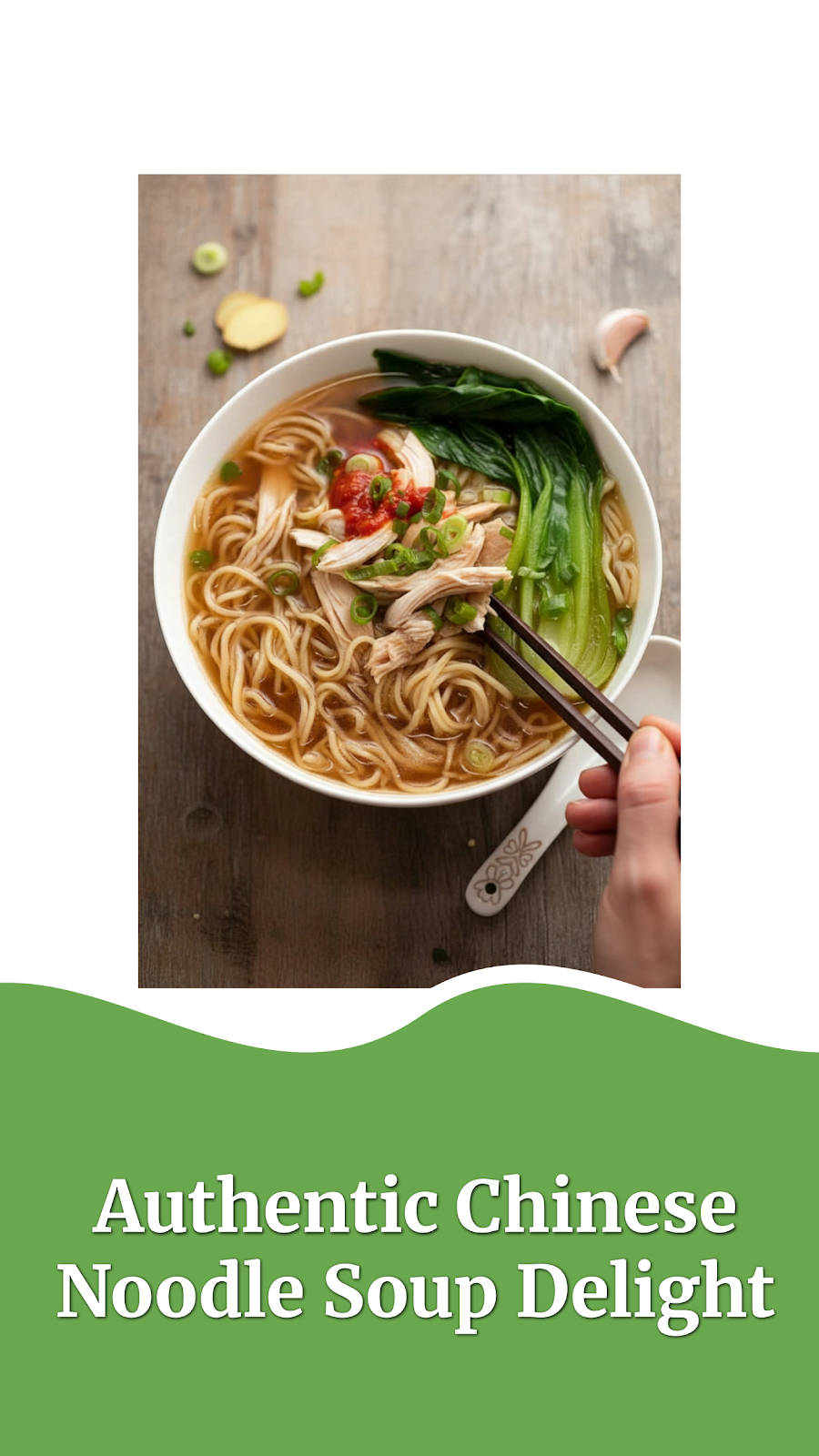
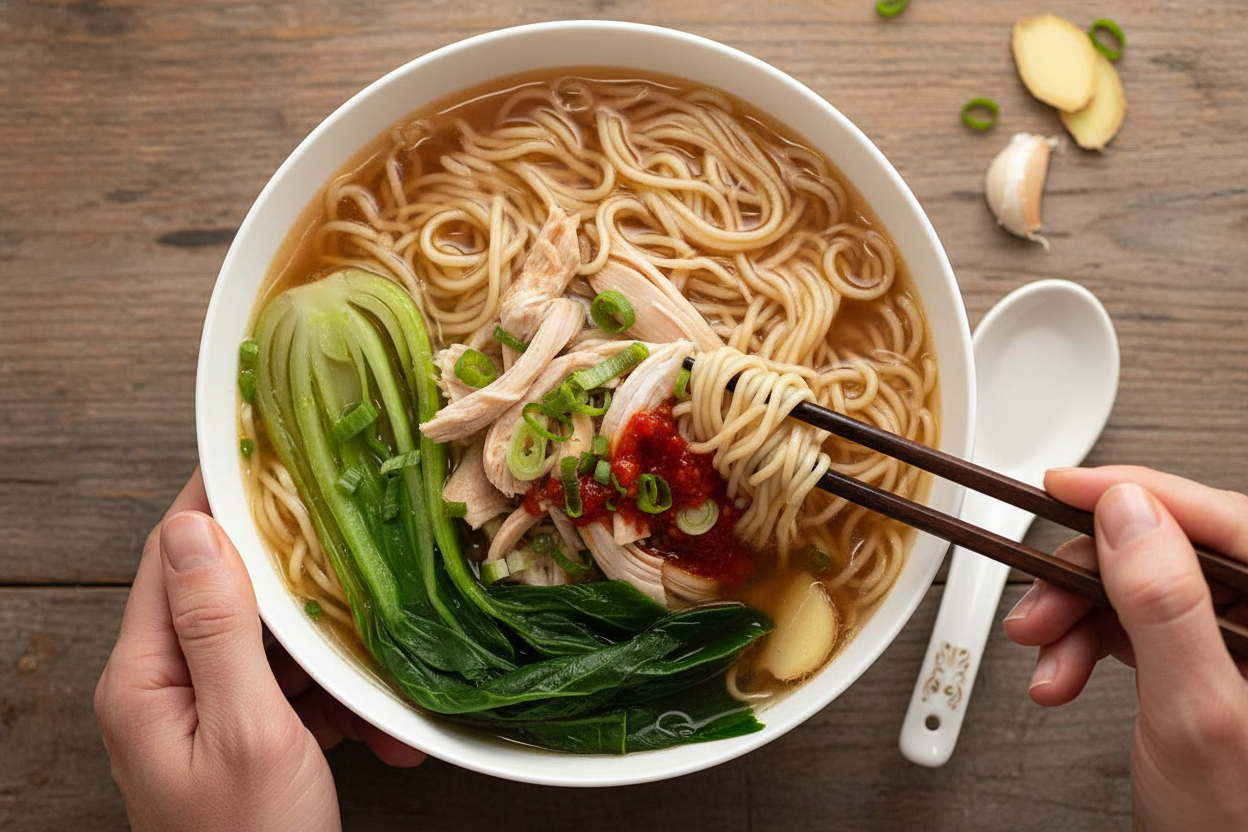
Place the cooked noodles into bowls. Top with shredded chicken and bok choy. Ladle the broth over the top and garnish with finely sliced green onions.
Serve
Serve the noodles with additional condiments such as chili paste or fresh chilies if desired.
Notes
Chicken Stock/Broth
Just store-bought chicken broth is fine here, but choose a good quality one. Avoid using chicken stock powder with hot water as the flavor can be overly intense.
Smashed Garlic
Smash the garlic by placing the side of your knife on a clove and using the heel of your hand to burst it open. This method allows the garlic flavor to seep into the broth while making it easy to remove before serving.
Chinese Cooking Wine
Chinese cooking wine is essential for elevating the broth’s flavor. If you do not have it, you can substitute with Dry Sherry, Japanese cooking sake, or mirin. If using mirin, skip the sugar. For a non-alcohol option, reduce the soy sauce and add oyster sauce instead.
Extra Broth Flavoring Options
Consider adding ingredients like star anise, chili, green onion, or onion quarters to enhance the broth flavor.
Sesame Oil
Use toasted sesame oil for a deeper flavor; avoid untoasted versions.
Noodles
Feel free to use either fresh or dried noodles. Adjust the quantity based on the type:
– Fresh thin noodles: 90g per serving
– Fresh wide noodles: 150g per serving
– Dried noodles: 60g per serving
– Ramen: one pack per person
Be sure to cook according to packet instructions and do not add them directly into the broth.
Toppings
Cook proteins separately for convenience; shredded cooked chicken is a great option. You may also add eggs by whisking them lightly and pouring into the soup to create ribbons. Popular vegetables include bok choy, carrots, and bean sprouts, cut into appropriate sizes for boiling.
Vegetable Suggestions
Choose vegetables that can be easily boiled. Common choices include bok choy, gai lan, choy sum, carrots, green beans, zucchini, asparagus, broccoli, and cauliflower.
Nutrition
Nutrition values are based on a serving size including 1/4 tsp of sesame oil. You can enhance nutritional value by adding more vegetables and opt for low-sodium soy sauce to further reduce sodium content.
Cook Techniques
Infusing Flavors in Broth
Start by heating your broth ingredients in a saucepan over high heat. Cover with a lid to bring the mixture to a simmer, then reduce the heat to medium and allow it to simmer for 8 to 10 minutes. This process helps to meld the flavors of the garlic, ginger, and other components into the broth.
Cooking Noodles
Prepare noodles according to the package instructions. It’s important not to add the noodles directly into the broth, as they will absorb too much liquid. Instead, cook them separately in boiling water for the best texture.
Blanching Vegetables
Cut your bok choy or chosen vegetables into appropriate sizes, ensuring they are thoroughly washed. You can either cook them in the broth or in the water used for cooking the noodles for about one minute. This keeps the vegetables vibrant and slightly crisp.
Garnishing the Soup
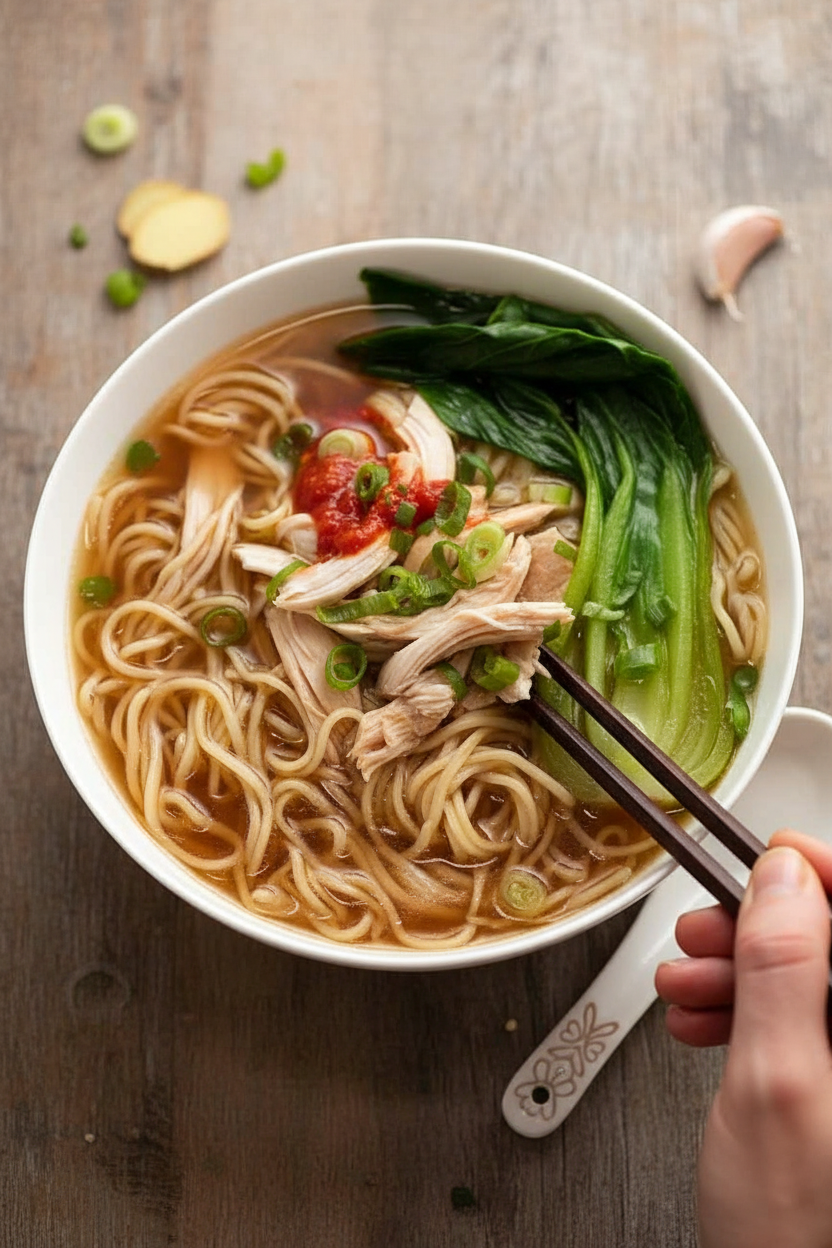
When serving, place the cooked noodles in bowls first, followed by the protein and blanched vegetables. Ladle the infused broth over the top, and finish with a sprinkle of sliced scallions or shallots for an added pop of flavor.
FAQ
Can I use homemade broth instead of store-bought?
Yes, homemade broth can work well, provided it is flavorful and low in sodium. Just ensure it has a good depth of flavor similar to store-bought options.
What if I don’t have Chinese cooking wine?
If you don’t have Chinese cooking wine, you can substitute it with dry sherry, Japanese cooking sake, or mirin. If using mirin, reduce the sugar in the recipe, as it is sweet.
What types of noodles can I use for this recipe?
You can use fresh or dried noodles. Fresh thin noodles generally work best at about 90g per serving, while thicker ones may require more. Dried noodles typically use about 60g per serving.
Can I add other proteins besides chicken?
Absolutely! You can use any cooked protein of your choice, such as shrimp, beef, pork, or even tofu.
How can I enhance the nutritional value of the dish?
You can enhance the dish by adding more vegetables. This will not only increase the nutritional value but also add texture and variety.
Conclusion
This chicken noodle soup, infused with aromatic broth and topped with fresh vegetables, provides a comforting and nutritious meal. It’s easy to prepare and allows for customization based on your preferences. Whether you’re looking for a quick weeknight dinner or a cozy lunch, this recipe hits all the right notes.
More recipes suggestions and combination
Vegetable Variations
Incorporate a variety of vegetables such as gai lan, choy sum, or broccolini to enhance the nutritional profile and add different textures.
Protein Alternatives
Substitute shredded chicken with tofu, shrimp, or thinly sliced beef for a different protein option that complements the flavors of the broth.
Spice it Up
Add sliced chilies or a dash of chili oil for those who enjoy a spicy kick in their noodle soup.
Creamy Twist
Mix in a tablespoon of coconut milk for a creamy, tropical flavor that pairs well with the spices in the broth.
Herb Enhancements
Garnish with fresh cilantro or Thai basil for an aromatic finish to elevate the overall flavor profile.
Broth Variations
Experiment with miso or bone broth instead of chicken stock for a richer flavor base.
Seasoning Options
Include additional seasonings such as lime juice or fish sauce to introduce a unique tanginess to the soup.