
Introduction
Eggplants, also known as aubergines, are a versatile and delicious vegetable that can be prepared in various ways. This article outlines a simple roasted eggplant recipe that highlights the natural flavors of this extraordinary ingredient. With just a few basic ingredients and some easy preparation methods, you can achieve a perfectly roasted eggplant dish that is both nutritious and satisfying.
Detailed Ingredients with measures
700g/ 1.2 lb eggplants (2 medium), aka aubergine
3 tbsp olive oil
1/2 tsp salt (kosher / cooking salt, or 1/4 tsp table salt)
1/2 tsp black pepper
Prep Time
15 minutes
Cook Time, Total Time, Yield
Cook Time: 30 minutes
Total Time: 45 minutes
Yield: Serves 4
Instructions
Preheat your oven to 240°C / 450°F (220°C fan). For those who are new to roasting eggplant, it is advisable to line a tray with parchment or baking paper to prevent losing any of the delicious caramelized surface during cooking.
Begin by cutting the eggplant into large cubes, approximately 3 cm / 1.2 inches. Place the cubes in a large bowl and drizzle them with olive oil, salt, and black pepper. Toss the eggplant well to ensure that all the pieces are evenly coated.
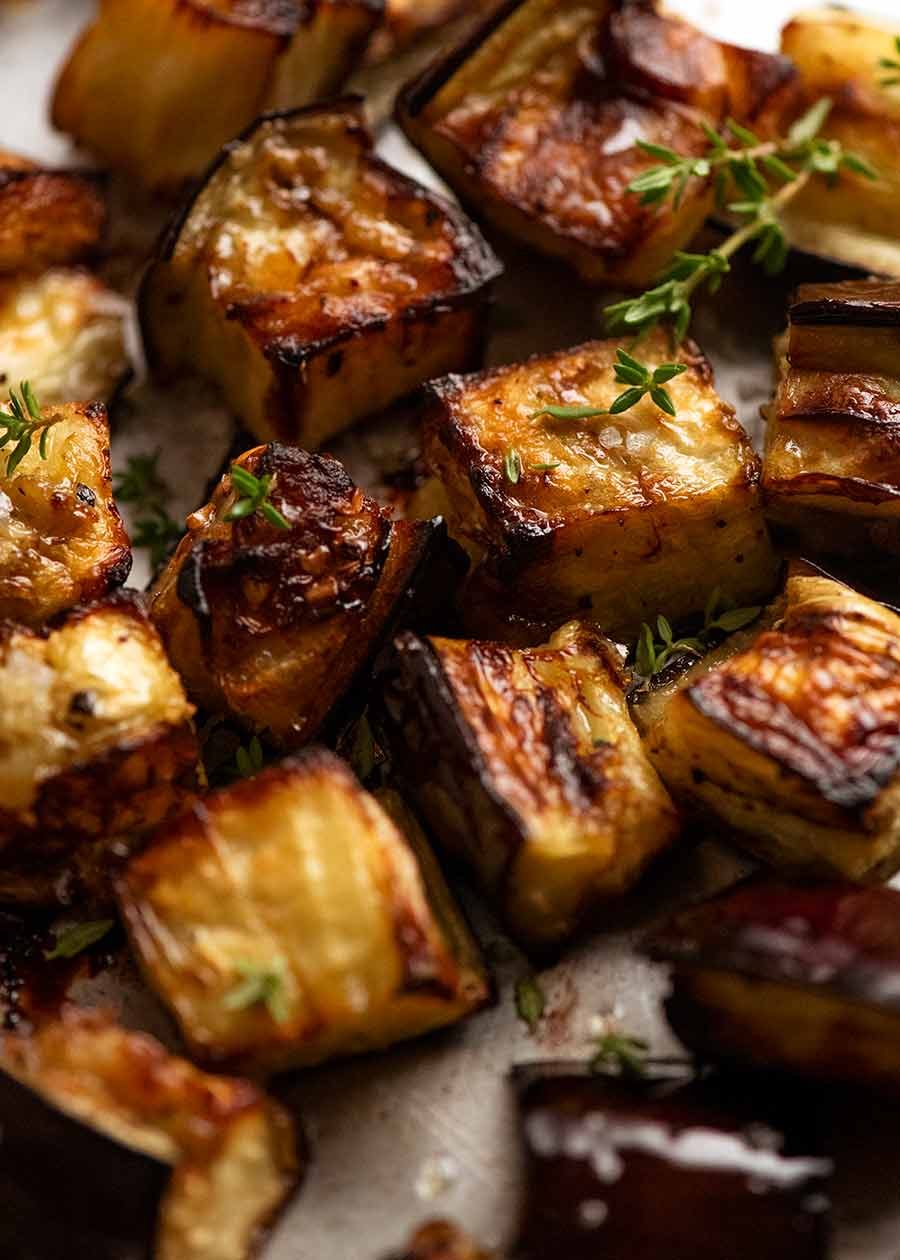
Next, spread the seasoned eggplant cubes onto the prepared tray and roast them in the oven for 20 minutes. After the initial roasting time, give the eggplant a turn and roast for an additional 10 minutes. The final product should have caramelized edges while remaining soft inside, not shriveled or mushy.
Once done, transfer the roasted eggplant to a serving plate. While it is delicious on its own, there are several finishing options that can elevate the dish. Consider garnishing with fresh thyme leaves, a drizzle of lemon juice, or a sprinkle of parsley, chives, or green onions for a touch of freshness. For added tartness, a tiny drizzle of balsamic vinegar or balsamic glaze works wonderfully. Finally, a dollop of creamy yogurt complements the juicy eggplant flesh beautifully.
Recipe Notes
If you prefer peeling the eggplant, you can create “zebra stripes” down the skin. However, leaving some skin on helps to maintain the structure of the eggplant cubes during cooking. Modern eggplants have largely been bred to minimize bitterness, so there is often no need for the old method of salting the eggplant. However, if desired, you can sprinkle the cubes with salt and leave them in a colander for 30 minutes before rinsing and patting dry. Then proceed with the recipe as instructed, omitting any additional salt.
When selecting eggplants, look for ones that are firm with a slight give and feel heavy for their size. Avoid any that feel light, as they may be dried out inside. Enjoy your roasted eggplant as a delightful addition to any meal!
Detailed Directions and Instructions
Preheat the Oven
Preheat your oven to 240°C / 450°F (220°C fan) to ensure it’s hot enough for roasting.
Prepare the Baking Tray
Line a baking tray with parchment or baking paper. This step is optional but recommended for first timers to avoid losing the caramelized surface during roasting.
Cut the Eggplants
Take the eggplants and cut them into large cubes, about 3 cm / 1.2 inches in size.
Mix Ingredients
Place the cubed eggplants into a large bowl. Drizzle with 3 tablespoons of olive oil, and sprinkle in 1/2 teaspoon of salt and 1/2 teaspoon of black pepper.
Toss and Spread
Toss the eggplant cubes well to ensure they are evenly coated with the olive oil, salt, and pepper. Spread them out evenly on the lined baking tray.
First Roast
Roast the eggplants in the oven for 20 minutes.
Turn and Continue Roasting
After 20 minutes, turn the eggplants over and roast for an additional 10 minutes. The edges should be caramelized, and the insides should be soft without collapsing.
Serve
Once roasted, transfer the eggplants to a serving plate. They can be served plain, or consider the finishing options below.
Finishing Options
Add Fresh Herbs or Citrus
For extra flavor, sprinkle 1 teaspoon of fresh thyme leaves, or drizzle fresh lemon juice over the eggplants. Adding parsley, chives, or green onions can provide a touch of freshness and color.
Incorporate Balsamic Flavor
A tiny drizzle of balsamic vinegar or balsamic glaze can add a delightful pop of tartness that complements the roasted eggplants well.
Top with Yogurt
For a creamy contrast, consider adding a dollop of yogurt, which pairs nicely with the juicy eggplant flesh.
Notes
Peeling Eggplants
If you prefer less skin on the eggplant, you can peel it in “zebra stripes” (strips of skin left on). However, retaining some skin is essential to keep the eggplant cubes from collapsing into mush during cooking.
Bitterness and Salting
Many older preparation methods involved salting eggplants to reduce bitterness. However, modern eggplants usually have less bitterness. If you wish to salt them, sprinkle the cubed eggplant with 1 teaspoon of salt, let it sit in a colander for 30 minutes, rinse, pat dry, and then toss with oil and pepper (without additional salt) before roasting.
Selecting Eggplants
Choose eggplants that feel firm but slightly give when pressed. They should feel heavy for their size; a light eggplant often indicates a dried-out interior.

Cook techniques
Roasting
Roasting eggplants enhances their natural sweetness and produces a caramelized exterior. Preheat your oven to a high temperature (240°C / 450°F). Cut the eggplants into large cubes, toss with olive oil, salt, and pepper, and roast until they are soft inside and caramelized on the outside.
Peeling
You can peel eggplants if you find the skin unpleasant. To do this, create “zebra stripes” by peeling alternate strips of skin. However, leaving some skin on helps maintain the structure and prevents the cubes from turning mushy.
Salting
While modern eggplants are often less bitter, traditional preparation involved salting to remove bitterness. If preferred, sprinkle cubed eggplants with salt, let them sit in a colander for 30 minutes, then rinse and dry before seasoning with oil and pepper.
Choosing Eggplants
Select eggplants that are firm yet slightly yielding when pressed. They should feel heavy for their size, indicating a juicy interior. Avoid light eggplants, as they may be dried out inside.
FAQ
Can I use any type of eggplant for this recipe?
Yes, you can use different types of eggplant, but the cooking time may vary based on the size and shape of the eggplant you choose.
Do I need to peel eggplants before cooking?
Peeling is optional. If you prefer the texture of the skin, you can leave it on. However, peeling can reduce bitterness for some individuals.
Why do you recommend salting the eggplant?
Salting can help remove some bitterness, though modern varieties are less bitter. If you’re concerned about bitterness, salting can be an extra precaution.
What other seasonings can I add to roasted eggplant?
In addition to salt and pepper, you can experiment with garlic powder, paprika, or chili flakes for extra flavor. Fresh herbs like thyme, parsley, or chives also complement the dish.
Can I store leftover roasted eggplant?
Yes, leftover roasted eggplant can be stored in an airtight container in the refrigerator for up to 3 days. Reheat gently in the oven or a skillet before serving.
Conclusion
Roasting eggplants is a simple yet effective way to bring out their natural sweetness and create a delicious, caramelized flavor. With minimal ingredients, this preparation can serve as a fantastic base for a variety of dishes or be enjoyed on its own. Experimenting with different finishing options can elevate the dish further, adding freshness, creaminess, or acidity to complement the eggplant’s texture.
More recipes suggestions and combination
Eggplant and Tomato Salad
Combine roasted eggplants with fresh tomatoes, basil, and a drizzle of olive oil for a refreshing salad.
Eggplant Pasta
Toss roasted eggplant cubes with your favorite pasta, garlic, and a sprinkle of Parmesan cheese for a hearty meal.
Eggplant Dip
Blend roasted eggplants with tahini, garlic, lemon juice, and olive oil to create a creamy dip for vegetables or pita chips.
Grilled Eggplant Sandwich
Layer roasted eggplants with hummus, fresh spinach, and roasted red peppers on your favorite bread for a satisfying sandwich.
Eggplant Curry
Add roasted eggplants to a coconut milk-based curry for a rich, flavorful dish that pairs well with rice.
Stuffed Eggplants
Fill roasted eggplant halves with a mixture of quinoa, vegetables, and spices, then bake to create a hearty, nutritious meal.
Eggplant Buddha Bowl
Create a nourishing bowl by pairing roasted eggplant with grains, chickpeas, and a tahini dressing for a wholesome option.
