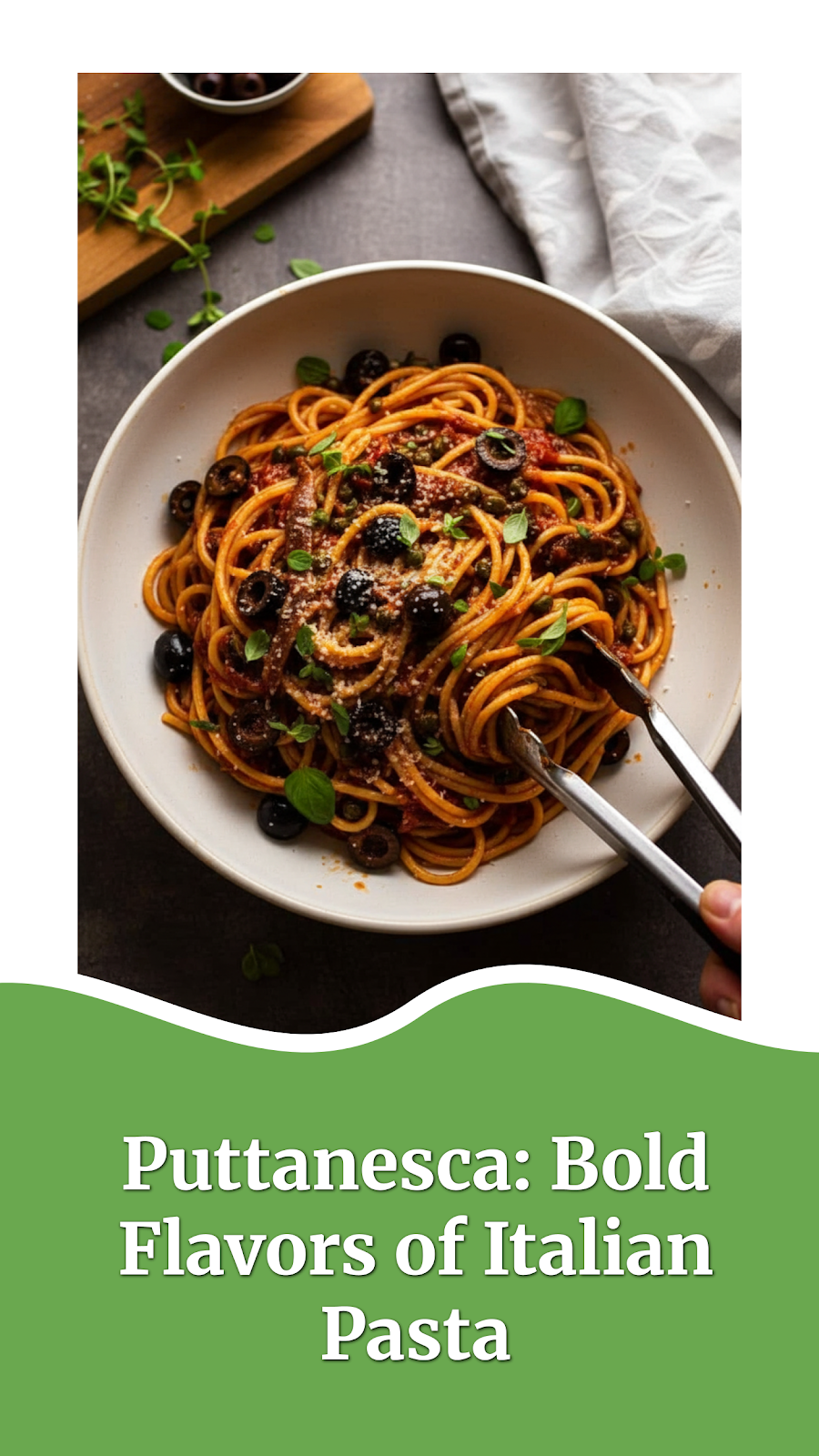
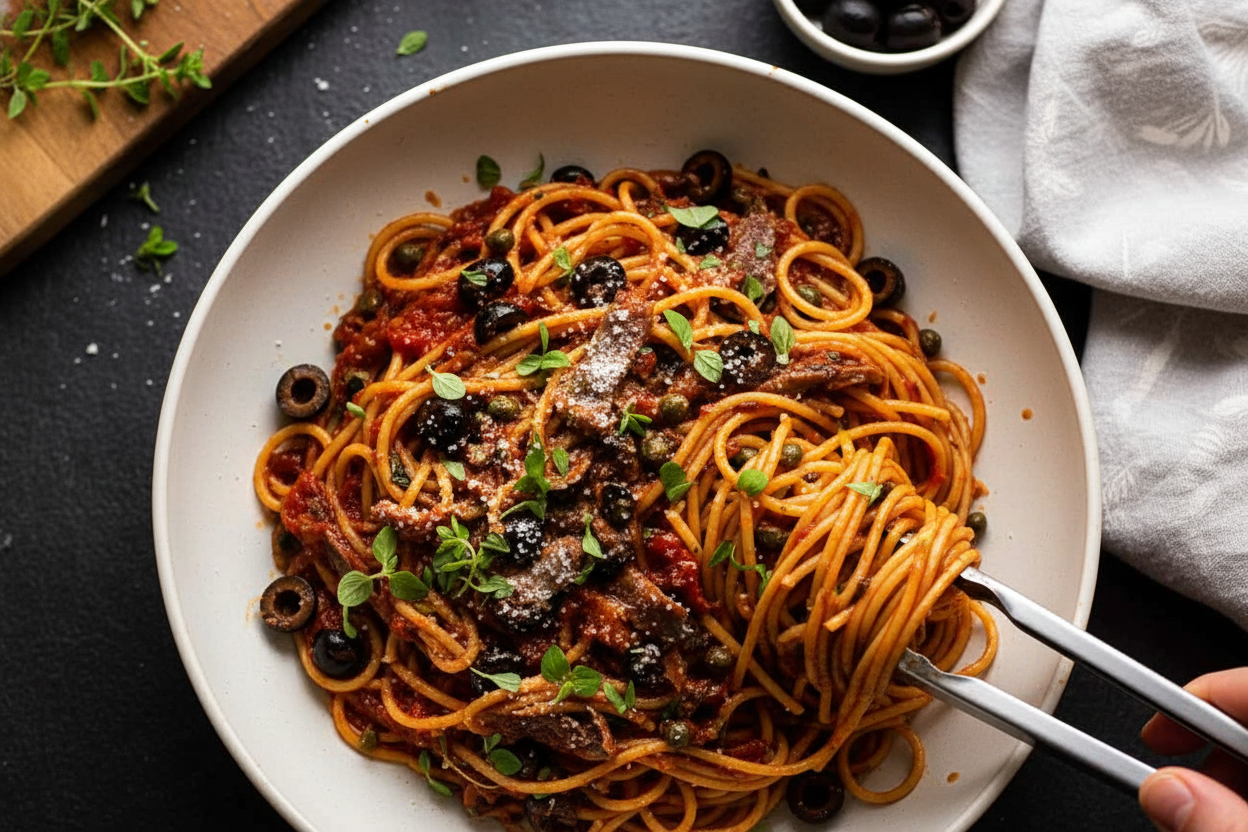
Introduction
This delightful dish is a perfect blend of flavors, making use of simple yet impactful ingredients. The combination of spaghetti with anchovies, olives, and capers creates a rich, savory sauce that is easy to prepare and perfect for any weeknight dinner. By using quality ingredients and simple techniques, you can savor a meal that feels gourmet without spending hours in the kitchen.
Detailed Ingredients with measures
200g / 7oz spaghetti, or other long pasta
2 tbsp extra virgin olive oil, plus more for drizzling
2 garlic cloves, finely minced
3 anchovy fillets, finely minced
1/4 cup pitted black olives, preferably in oil, quartered
1 tbsp capers, drained
1/4 tsp chilli flakes (red pepper flakes)
400g / 14oz can crushed tomato
1/2 cup water
1 tsp fresh oregano, roughly chopped
1/8 tsp kosher / cooking salt
1/8 tsp black pepper
1/4 tsp sugar, if needed
2 tbsp fresh basil, roughly chopped
Prep Time
10 minutes
Cook Time, Total Time, Yield
Cook Time: 20 minutes
Total Time: 30 minutes
Yield: Serves 2-3
This delicious pasta dish brings together a medley of vibrant flavors, making it a perfect addition to your culinary repertoire. Enjoy it right away, and don’t forget to drizzle some extra virgin olive oil on top before serving!
Detailed Directions and Instructions
Prepare
Bring a large pot of water to a boil for the pasta. Warm serving bowls by microwaving them for 1 minute.
Cook garlic
In a medium skillet, heat the olive oil over medium-high heat. Add the finely minced garlic and sauté for about 15 seconds or until it begins to turn golden.
Cook anchovies
Add the finely minced anchovies, quartered black olives, capers, and chili flakes to the skillet. Cook the mixture for 1 minute.
Add tomato
Pour the crushed tomatoes into the skillet. Then, take the empty tomato can, add 1/2 cup of water, swirl it around to rinse any leftover tomato, and pour this water into the skillet.
Simmer
Incorporate the freshly chopped oregano, kosher salt, and black pepper into the skillet. Stir the contents and bring to a simmer. Reduce heat to low and cook for approximately 10 minutes or until the tomatoes have broken down and formed a sauce. If the pasta is not ready yet, turn off the stove once the sauce is ready.
Cook pasta
While the sauce is simmering, add 2 teaspoons of salt to the boiling water. Add the spaghetti (or other long pasta) and cook according to the package instructions.
Reserve pasta water
Just before draining the pasta, scoop out a mugful of the pasta cooking water and set it aside. Drain the pasta in a colander.
Toss pasta
Immediately add the drained pasta to the sauce in the skillet. Pour in 1/4 cup of the reserved pasta cooking water. Using two wooden spoons, toss the pasta on low heat for about 1 minute or until the sauce clings to the pasta strands. If the pasta appears too dry, add more reserved pasta cooking water as needed and continue tossing.
Serve
Transfer the pasta into the warmed bowls. Drizzle with additional olive oil and sprinkle generously with fresh basil. Serve immediately!
Notes
Anchovies
Anchovies are an essential ingredient that adds depth of flavor and saltiness without making the sauce taste fishy. They dissolve into the sauce, contributing great savory flavor. For a substitute, use 3/4 to 1 teaspoon of anchovy paste.
Olives
Choose high-quality olives preserved in oil for better flavor. Cut the olives to release their flavor into the sauce, which is crucial.
Capers
Both normal and baby capers can be used in this recipe. Baby capers are preferable if the standard ones are unusually large.
Sugar
The need for sugar depends on the quality of the tomatoes used; better quality tomatoes are sweeter. If the sauce tastes too sour, add sugar with the salt after tasting.
Pasta cooking water
The starch in the pasta cooking water helps thicken the sauce, ensuring it adheres to the pasta rather than pooling at the bottom of the bowl.
Basil
Fresh basil is a lovely finishing touch. If unavailable, sprinkle with parmesan cheese as an alternative, but note that it will provide a different flavor.
Storage
Pasta is best served immediately. Leftover sauce can be stored for a couple of days, but the pasta will absorb the sauce and may dry out. Reheat leftovers with a sprinkle of water to loosen.
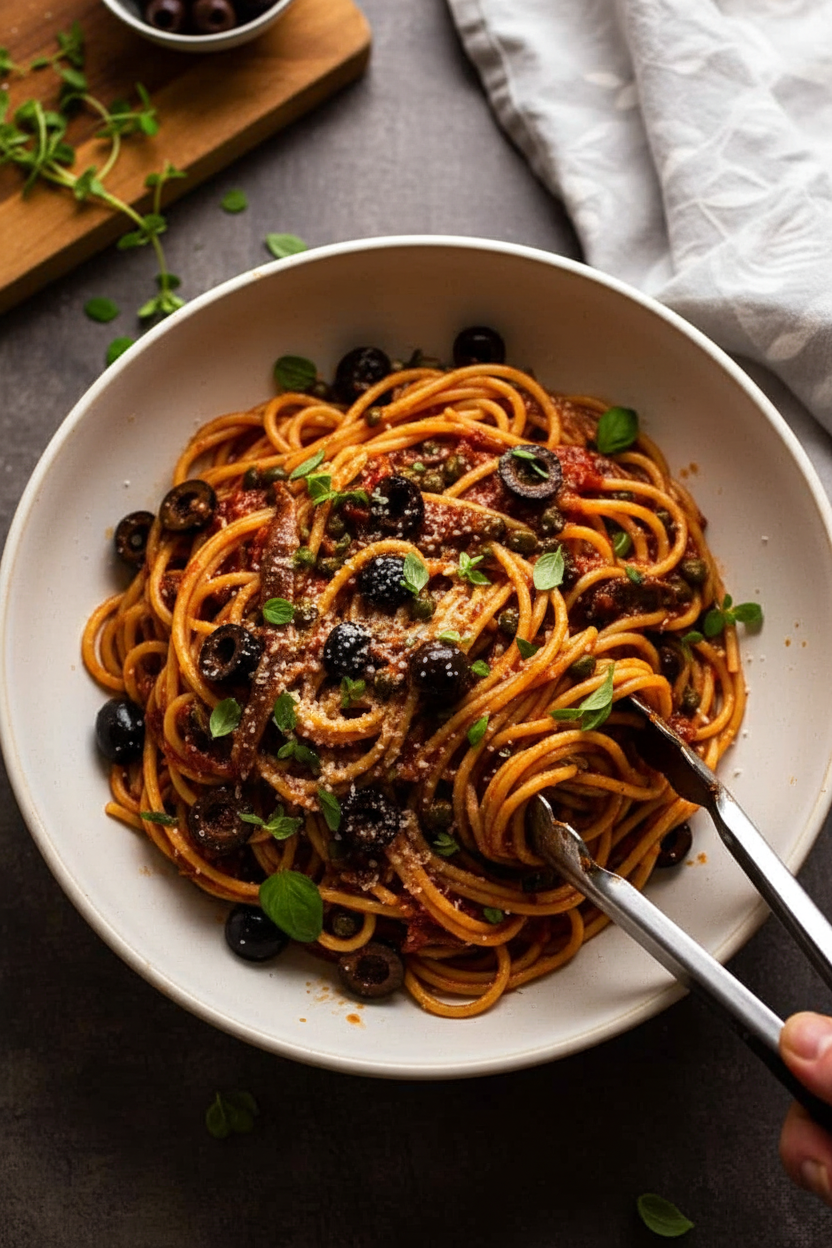
Cook techniques
Preparing Pasta Water
Bring a large pot of water to a rolling boil before adding the pasta. This ensures even cooking and helps prevent sticking.
Infusing Flavors
Heat olive oil and cook garlic until it turns golden. This method infuses the oil with garlic flavor, enhancing the dish’s overall taste.
Building the Sauce
Layer the ingredients in the skillet: first the anchovies, then olives and capers to create a savory base, followed by tomatoes and water. This combination develops a rich flavor profile.
Simmering
Simmer the sauce after it’s combined, allowing the tomatoes to break down. This step thickens the sauce and melds the flavors.
Cooking Pasta
Add salt to the boiling water before cooking pasta. This not only flavors the pasta but also enhances the overall dish.
Reserving Pasta Water
Scoop a mugful of pasta cooking water before draining. This starchy water can be added back to the sauce to help it adhere to the pasta.
Tossing Pasta
Combine the drained pasta with the sauce in the skillet using wooden spoons. This method ensures each strand is evenly coated.
Serving
Transfer the pasta into warmed bowls immediately after tossing. Drizzle with olive oil and top with fresh basil for added flavor just before serving.
FAQ
Can I use different types of pasta?
Yes, you can use any long pasta variety you prefer, such as fettuccine or linguine.
What if I don’t have anchovies?
You can substitute with anchovy paste, using about 3/4 to 1 teaspoon for a similar flavor profile.
Can I use dried herbs instead of fresh?
Yes, dried herbs can be used, but fresh herbs are recommended for more vibrant flavor.
How do I know if my tomatoes are too sour?
Taste the tomatoes before adding salt or sugar. If they have a noticeable sourness, you may add sugar to balance the flavor.
Can I prepare the sauce in advance?
Yes, the sauce can be made ahead and refrigerated for a couple of days; just reheat it gently before adding cooked pasta.
How should I store leftovers?
Leftovers should be stored in an airtight container in the refrigerator, with a sprinkle of water to loosen when reheating.
Conclusion
This pasta dish is a delightful combination of flavors that come together beautifully. The anchovies, olives, and capers add depth and richness, while the tomatoes create a comforting sauce. With a touch of fresh basil and a drizzle of olive oil, it’s a satisfying meal perfect for any day of the week. Enjoy it warm and fresh, as it’s best served immediately for optimal flavor and texture.
More recipes suggestions and combination
Spaghetti Aglio e Olio
Replace the anchovies and olives with sliced red pepper flakes and freshly chopped parsley for a simple garlic and oil pasta.
Pasta Puttanesca
Add capers, olives, and anchovies to spaghetti with a rich tomato sauce, and finish with fresh parsley for an Italian classic.
Vegetable Pasta
Incorporate seasonal vegetables like zucchini, bell peppers, and spinach for added nutrition and flavor in your spaghetti dish.
Pesto Pasta
Use basil pesto in place of the tomato sauce for a creamy and aromatic variation, topped with toasted pine nuts and parmesan cheese.
Creamy Tomato Pasta
Add a splash of heavy cream to the tomato sauce for a rich and velvety texture, perfect with a sprinkle of parmesan cheese.
Seafood Pasta
Incorporate shrimp or mussels into the sauce for a seafood twist, enhancing the overall flavor of your dish.
Chickpea Pasta
Use chickpea pasta for a gluten-free option and pair it with the same sauce for a hearty and protein-packed meal.
Herbed Pasta Salad
Transform the pasta into a cold salad with diced vegetables, olives, and a lemon vinaigrette, perfect for a refreshing summer dish.