Introduction
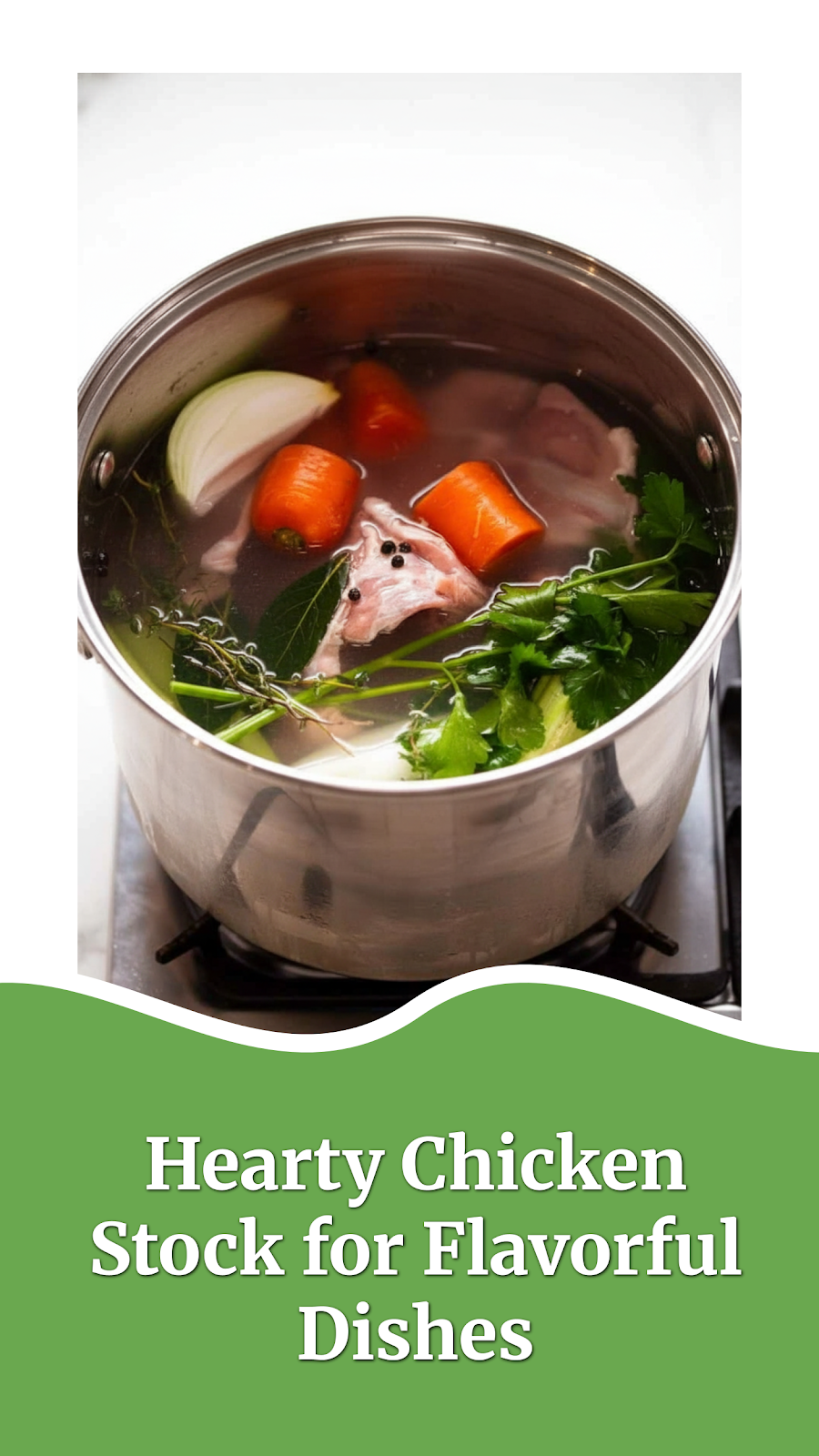
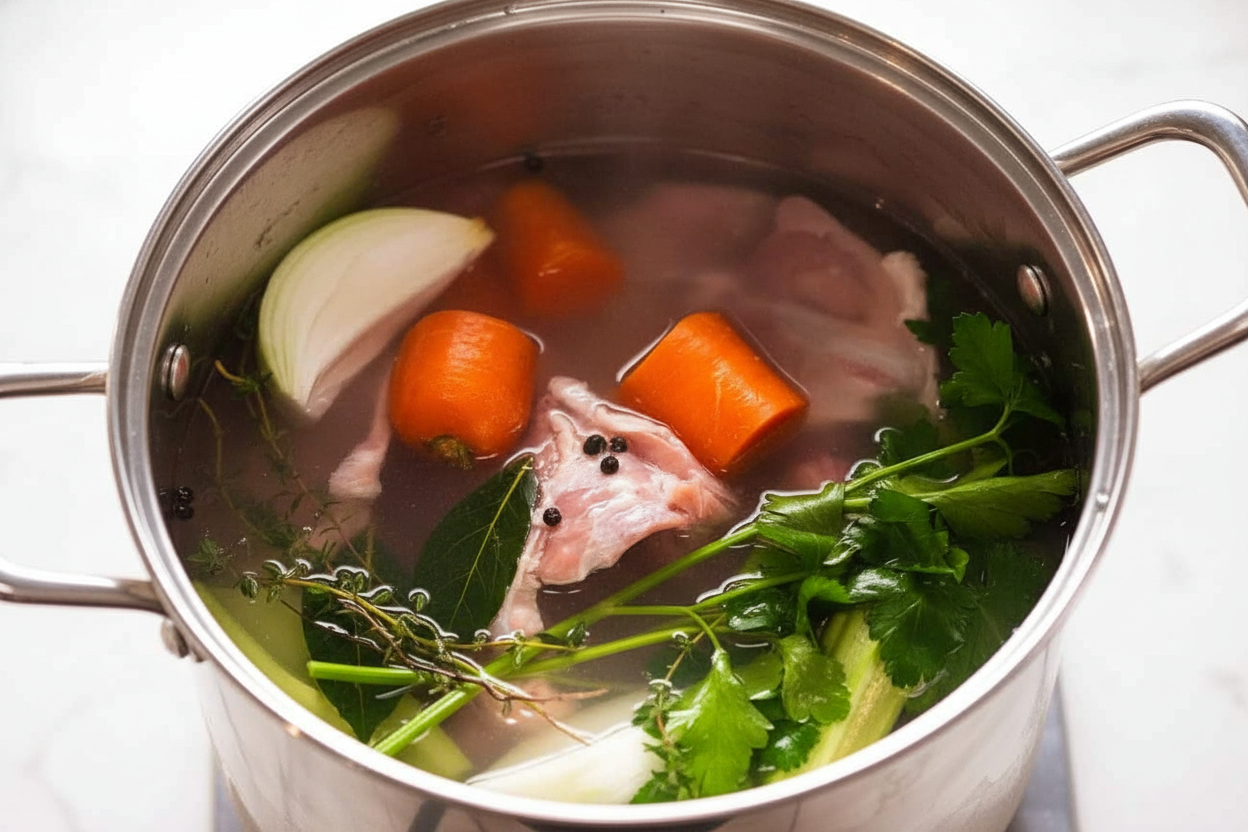
Homemade chicken stock is a flavorful and nourishing foundation for many dishes, from soups to sauces. This recipe utilizes chicken frames along with a selection of vegetables and herbs, ensuring a rich, clear stock that enhances any culinary creation. Making your own stock is not only economical but also allows you to control the quality of ingredients, leading to a healthier outcome.
Ingredients
2 kg/4 lb chicken frames (raw)
1 medium carrot, unpeeled, cut into 4 equal pieces
1/2 onion, peeled and halved
1 celery stem, cut into four (use the leaves too)
1/2 tbsp black peppercorns
1 tbsp apple cider vinegar
2 bay leaves, fresh (or 1 dried)
2 thyme sprigs (or 1/2 tsp dried leaves)
3 parsley sprigs
3 litres/3 quarts cold tap water
Prep Time
20 minutes
Cook Time, Total Time, Yield
Cook Time: 3 hours
Total Time: 3 hours 20 minutes
Yield: Approximately 2 litres/2 quarts of stock
Making chicken stock at home is a simple process that results in a glossy, gelatin-rich liquid perfect for countless recipes. By following these steps, you will be well on your way to enhancing your cooking with homemade stock. Enjoy the wholesome flavors and the benefits of knowing exactly what goes into your kitchen essentials!
Detailed Directions and Instructions
Fill pot
Place all the chicken stock ingredients into a large stockpot (7 litre / 7 quarts+). Pour in 3 litres / 3 quarts of cold tap water, ensuring that the water just about covers the bones.
Scoop off scum
Bring the pot to a boil over medium-high heat. As it heats, use a ladle to scoop off and discard any foam that collects on the surface. This step helps to ensure that the stock remains clear.
Simmer 3 hours
Reduce the heat to low and let the pot simmer for 3 hours without a lid. Adjust the heat so that the surface of the stock is barely rippling and you see a gentle bubble every now and then. Avoid a rapid boil, as this can make the stock murky.
Strain
Using a lid to hold back the solids, carefully pour the stock through a fine sieve into a separate pot or large bowl. Alternatively, you can scoop out the larger solids first with a slotted spoon before straining.
Goal
Aim to have approximately 2 litres / 2 quarts of stock. If you end up with more than 2.25 litres / quarts, reduce the stock by simmering it on low heat. If you have less than 2 litres / quarts, simply add more water to reach the desired volume.
Fill jars/containers
Measure the stock into containers for easy storage and rapid cooling. It is recommended to use multiples of 1 cup for convenience.
Cool
Allow the stock to cool on the counter before refrigerating. This cooling process will allow any fat to rise to the surface and solidify.
Discard fat
Once cooled, scrape off any fat that has solidified on the surface and discard it.
Storing and Using
Ready to use!
This stock has a similar strength to store-bought stock, allowing you to use it in recipes that call for chicken stock at a 1:1 ratio.
Storing
You can store the stock in the refrigerator for up to 5 days or freeze it for up to 6 months.
Salt adjustment
Homemade stock is unsalted, unlike store-bought versions. To match the salt level of store-bought low sodium chicken stock, add 1/4 tsp salt for every 1 cup (250ml) of homemade chicken stock.
To use
When cold, the stock will have a jellied consistency due to gelatin. It can be melted back into liquid in about a minute on a medium-high stove or in the microwave. If needed, it can also be added in its jelly form directly to dishes, although you may have to liquify it for accurate measurement.
Notes
1. Chicken carcasses
Chicken frames, which are the bones and cartilage left after cutting off the meat, are ideal for this recipe. They provide a good balance of flavor, nutrients, and collagen, resulting in a clear and versatile stock. Avoid using roasted chicken carcasses as they yield insufficient flavor.
2. Cider vinegar
Adding apple cider vinegar helps extract nutrients from the bones without imparting any sour taste to the stock.
3. Fitting in pot
Arrange the bones and vegetables snugly in the pot, ensuring not to crush or break the bones, as this may result in a murky stock. The water should cover the bones just enough; if some bones protrude, they will sink as they cook.
4. Stock consistency
When cooled, the stock should have a jelly-like consistency due to the gelatin, signifying richness.
5. Salting
Since homemade stock is unsalted, you have the flexibility to reduce it without worrying about excessive saltiness. However, be aware that small natural salt amounts may be present.
6. Storing
The stock can be refrigerated for up to 5 days, becoming gelatinous when cold, which is beneficial for cooking. For longer storage, it can be frozen for up to 6 months and can be thawed using various methods. It will melt quickly when added to simmering liquids.
Cook techniques
Stock Preparation
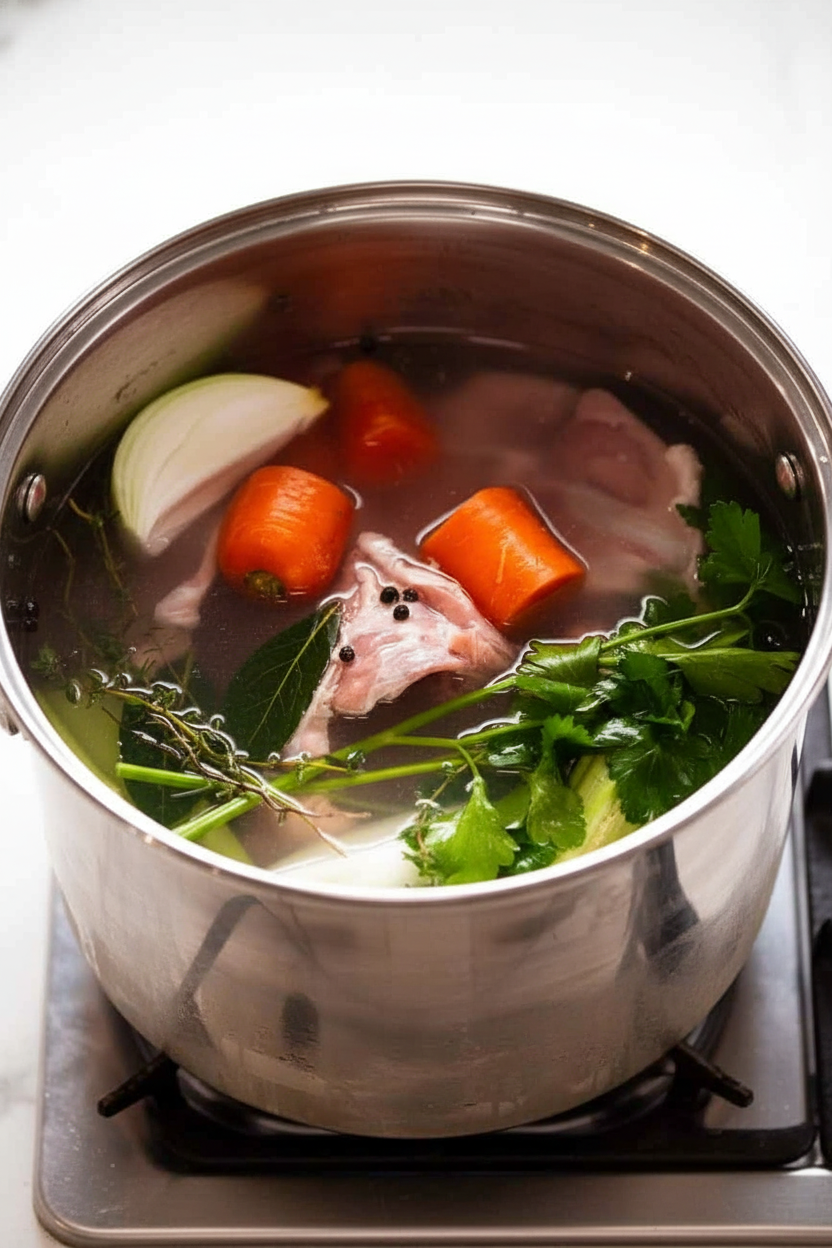
Place all chicken frames and vegetables into a large stockpot. Add enough cold water to just cover the bones and bring to a boil.
Removing Scum
Once boiling, skim off any foam that rises to the surface using a ladle to maintain a clear stock.
Simmering
Reduce heat and let the stock simmer on low for 3 hours, ensuring gentle bubbles to prevent murkiness.
Straining
After simmering, use a lid to hold solids back while pouring the stock through a fine sieve into another pot.
Cooling and Storing
Allow stock to cool and then refrigerate. This helps the fat solidify on the surface for easy removal.
Density Adjustment
If stock is too concentrated, reduce by simmering. If too weak, add water to reach desired volume.
FAQ
What is a chicken frame?
A chicken frame is the carcass left after the meat has been removed, ideal for making stock due to its balance of meat, bone, and fat.
Can I use roasted chicken carcasses?
No, roasted chicken carcasses are not recommended as they do not produce enough flavor for a good stock.
Why add apple cider vinegar?
Apple cider vinegar helps extract nutrients from the bones, enhancing the stock’s richness without affecting its taste.
How long does homemade stock last?
Homemade stock can be stored in the fridge for 5 days or frozen for up to 6 months.
Can I use the stock directly from the fridge?
Yes, the cold stock may be jellied but will liquefy quickly when heated, and can also be added directly to dishes in its jelly form.
How to adjust the salt level in homemade stock?
Since homemade stock is unsalted, add 1/4 teaspoon of salt for every cup to match the saltiness of store-bought versions.
Conclusion
This homemade chicken stock recipe is not only economical but also yields a rich, flavorful base that enhances a variety of dishes. By using chicken frames and simple vegetables, you can create a nutritious stock that is free from preservatives and additives. The natural gelatin extracted from the bones adds body and depth, making it an ideal ingredient for soups, sauces, and stews. With proper storage, your stock will keep fresh for days in the fridge or months in the freezer, providing convenience for future cooking.
More recipes suggestions and combination
Chicken Soup
Elevate your homemade chicken soup by using this stock as the base, adding tender chunks of chicken, a medley of vegetables, and seasoning to taste.
Risotto
Use the chicken stock in place of water to create a creamy risotto, infusing it with savory flavors that complement rice and any added ingredients, like mushrooms or peas.
Sauces
Incorporate homemade stock into sauces for enhanced richness. A splash of stock can deepen the flavor of gravies, pan sauces, or reductions.
Stews and Casseroles
Add the stock to your favorite stews or casseroles to provide a hearty foundation, helping to merge flavors while keeping the dish moist and delicious.
Cooked Grains
Use chicken stock to cook grains such as quinoa, rice, or barley for an added depth of flavor, enriching your side dishes or salads.
Vegetable Soups
Enhance vegetable-based soups with chicken stock, adding a meaty flavor dimension without overwhelming the dish. This is particularly good for creamy purees or chunky vegetable medleys.