Introduction
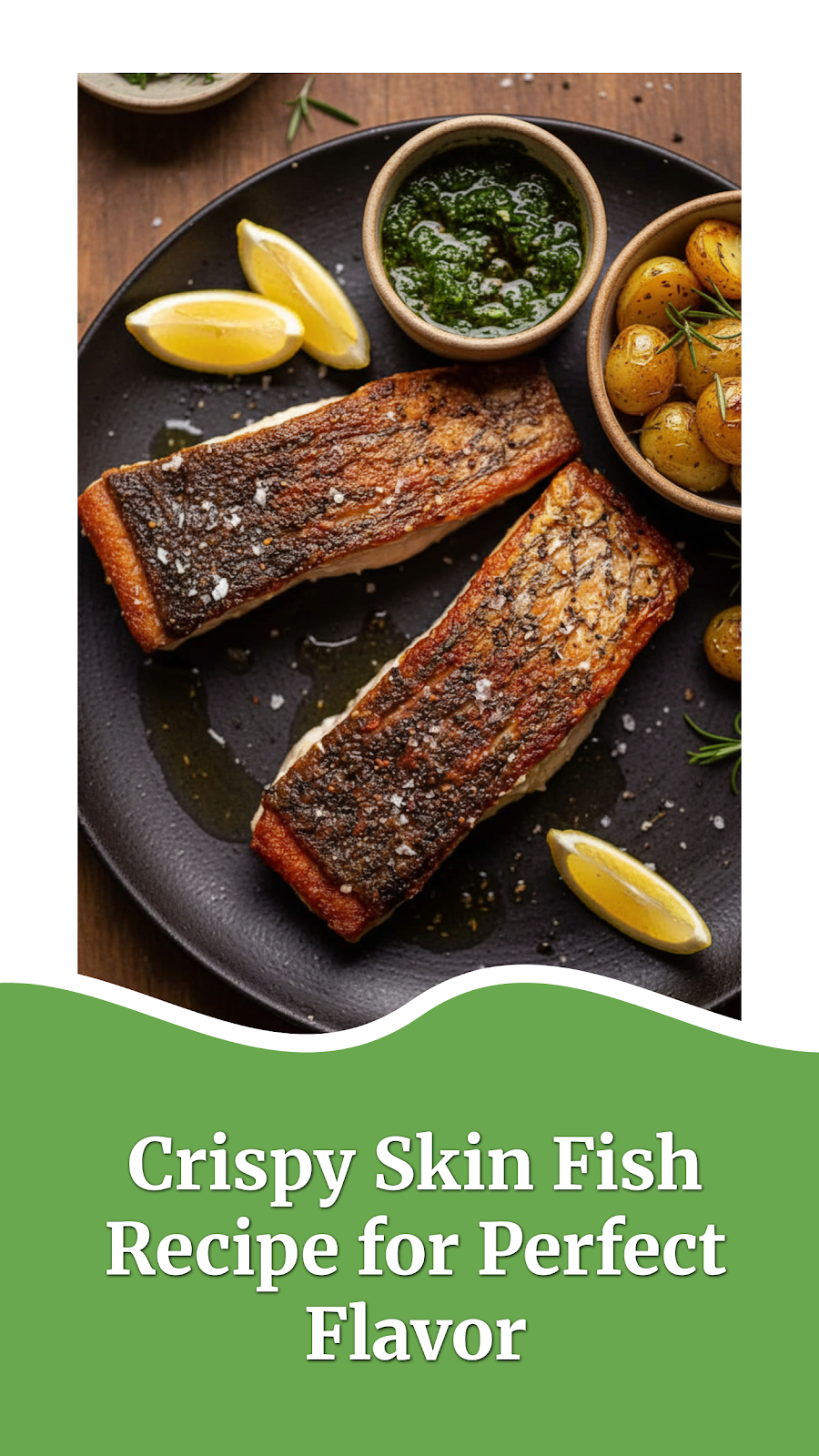
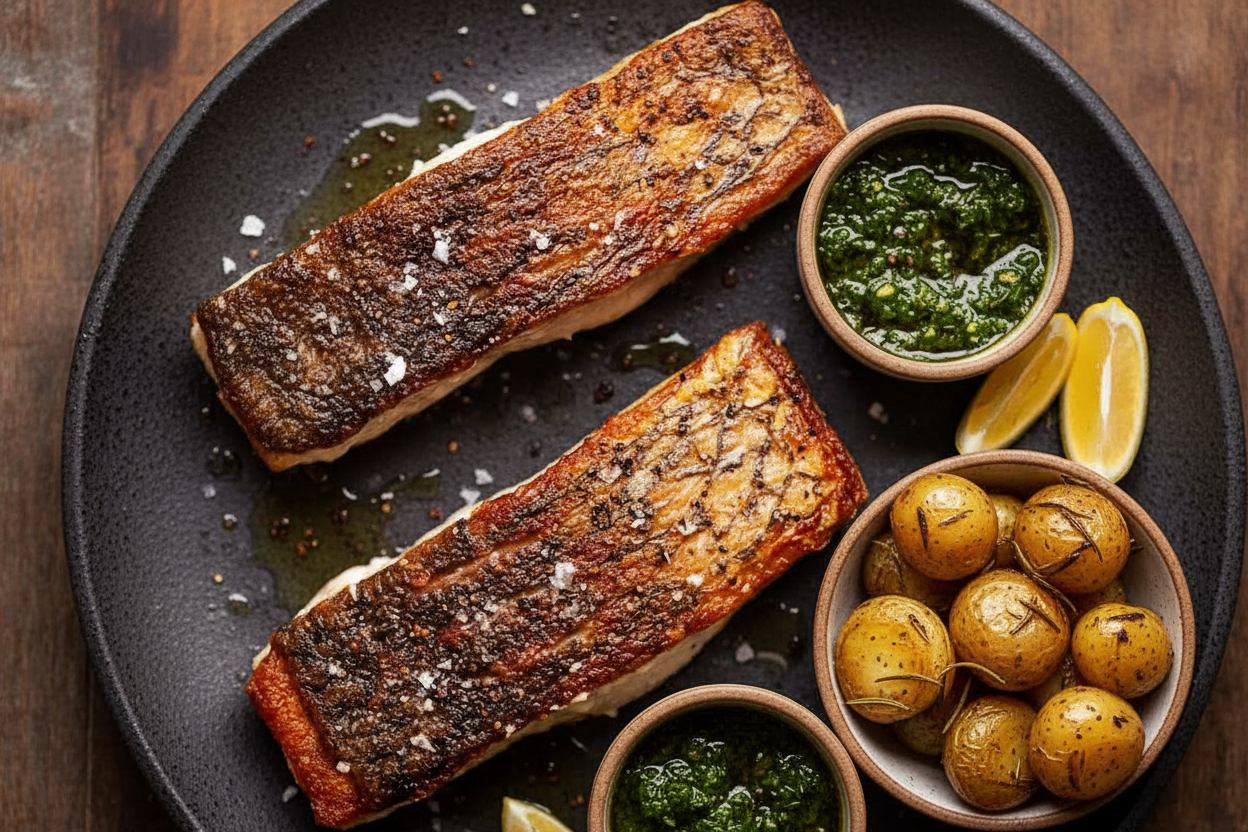
Cooking fish can be a delightful culinary experience, especially when you can achieve that perfect crispy skin. This recipe focuses on barramundi fillets but is versatile enough for other types of fish. A few simple ingredients and step-by-step instructions will take you from start to finish, ensuring a delicious and satisfying dish.
Ingredients
180g/6oz x 2 barramundi or other fish fillets, skin on, pin boned
2 tbsp olive oil (or vegetable, canola, or grapeseed oil)
3/4 tsp cooking/kosher salt (or 1/2 tsp table salt)
1/4 tsp black pepper
Sauces and sides – see note below for suggestions
Prep Time
30 minutes
Cook Time, Total Time, Yield
Cook Time: 15 minutes
Total Time: 45 minutes
Yield: 2 servings
By following these straightforward instructions, you’ll enjoy a delectable fish dish featuring crispy skin and tender flesh, along with various sauce options to elevate your meal.
Detailed Directions and Instructions
Preparation
1. **Thick Fillets definition**: Ensure the fish fillets are more than 2.5cm / 1″ thick at the thickest point for even cooking. These are best finished in the oven.
2. **Pan type**: Use a non-stick pan, preferably one that is oven-proof, especially for thick fillets.
3. **Preheat oven**: If using thick fillets, preheat the oven to 200°C/390°F (or 180°C for fan ovens).
Cooking
4. **Dry skin**: Pat the skin of the fish fillets dry with paper towels. For best results, leave them in the fridge, skin side up, uncovered for one hour before cooking (optional).
5. **Scoring skin**: To enhance crispiness for thick fillets, score the skin by making 4cm slashes, 1cm apart, and 2-3mm deep, cutting through the skin and slightly into the flesh.
6. **Season fish**: Just before cooking, sprinkle the flesh and skin with cooking salt and black pepper.
7. **Heat oil**: Heat the olive oil in the non-stick pan over medium-high heat until you see the first small wisps of smoke.
8. **Press fish down**: Place the first fillet in the pan, skin side down. Use your fingers or a spatula to press down lightly for 10 seconds to ensure the skin seals flat against the hot surface. Repeat with the second fillet (you can cook both at the same time).
9. **Cook skin**: Allow the skin side to cook for 2 to 3 minutes until it is crispy in the center and golden in color. You can lift the fish slightly to check the doneness of the skin.
10. **Transfer Thick Fillets to oven**: For thick fillets, transfer the pan directly to the oven and bake for 10 minutes without flipping the fish. Ensure the skin side remains down to achieve crispiness; the internal temperature should reach 55°C/131°F.
11. **Rest fish**: Once cooked, move the fish to a rack with the skin side up and let it rest for 3 minutes.
12. **Serving**: To serve, place the fish on a plate with the skin side up. Avoid pouring sauce over the skin until just before serving to maintain its crispiness.
Notes
1. Fish
– A standard portion size for fish is 180g/6oz per person. Common fish varieties suitable for this recipe include barramundi, bream, cod, salmon, and trout. Ensure the fillets are pin boned and descaled if purchased from a store.
2. Salt
– Cooking salt is recommended for seasoning due to its larger grains. If using table salt, adjust the amount down to maintain the same level of saltiness.
3. Thick fillets
– For fillets thicker than 2.5cm / 1″, begin cooking on the stove and finish in the oven to avoid uneven cooking. For salmon, which is oilier, cooking entirely on the stove is acceptable.
4. Oven proof pan
– If an oven-proof pan is unavailable, preheat a baking tray in the oven. Once hot, spray it with oil and place the fish skin side down on the tray before baking.
5. Scoring skin
– For easier scoring, grip the flesh surrounding the area where you’re cutting to tighten the skin.
6. Cooking time
– Cooking times will vary based on the thickness of the fillets. The specified 2.5cm / 1″ thick barramundi will generally take about 10 minutes in the oven.
7. Serving options
– Suggested sauces and sides that complement the fish include French Lentil Ragout, Easy no-stir Lemon Herb Risotto, Pea Puree, Creamy mashed cauliflower, and a variety of sauces such as Creamy white wine sauce, Béarnaise Sauce, or Garlic butter for fish. Make these sauces in the same pan while the fish rests for best flavor.
Cook techniques
Preparing Fillets
Pat the skin of the fish fillets dry with paper towels. For optimal crispiness, leave the fillets in the fridge, skin side up, uncovered for about an hour if time allows.
Scoring the Skin
Use a sharp knife to make slashes in the skin of thick fillets, cutting about 4cm long and 1cm apart, 2-3mm deep, to help the skin crisp up during cooking.
Seasoning the Fish
Sprinkle salt and black pepper on both the flesh and skin of the fish fillets just before cooking to enhance the flavor.
Heating the Oil
In a non-stick pan over medium-high heat, heat the oil until small wisps of smoke begin to appear, indicating it’s hot enough for cooking.
Cooking the Skin Side
Place the fillets in the pan skin side down and press down lightly for about 10 seconds to ensure the skin makes good contact with the pan. Cook for 2-3 minutes until the skin is golden and crispy.
Transferring to Oven
For thick fillets, transfer the pan to a preheated oven at 200°C/390°F (180°C fan) without flipping the fish. Cook until the internal temperature reaches 55°C/131°F.
Resting the Fish
Once cooked, transfer the fish to a rack skin side UP and let it rest for 3 minutes to allow juices to redistribute and skin to remain crispy.
Serving the Fish
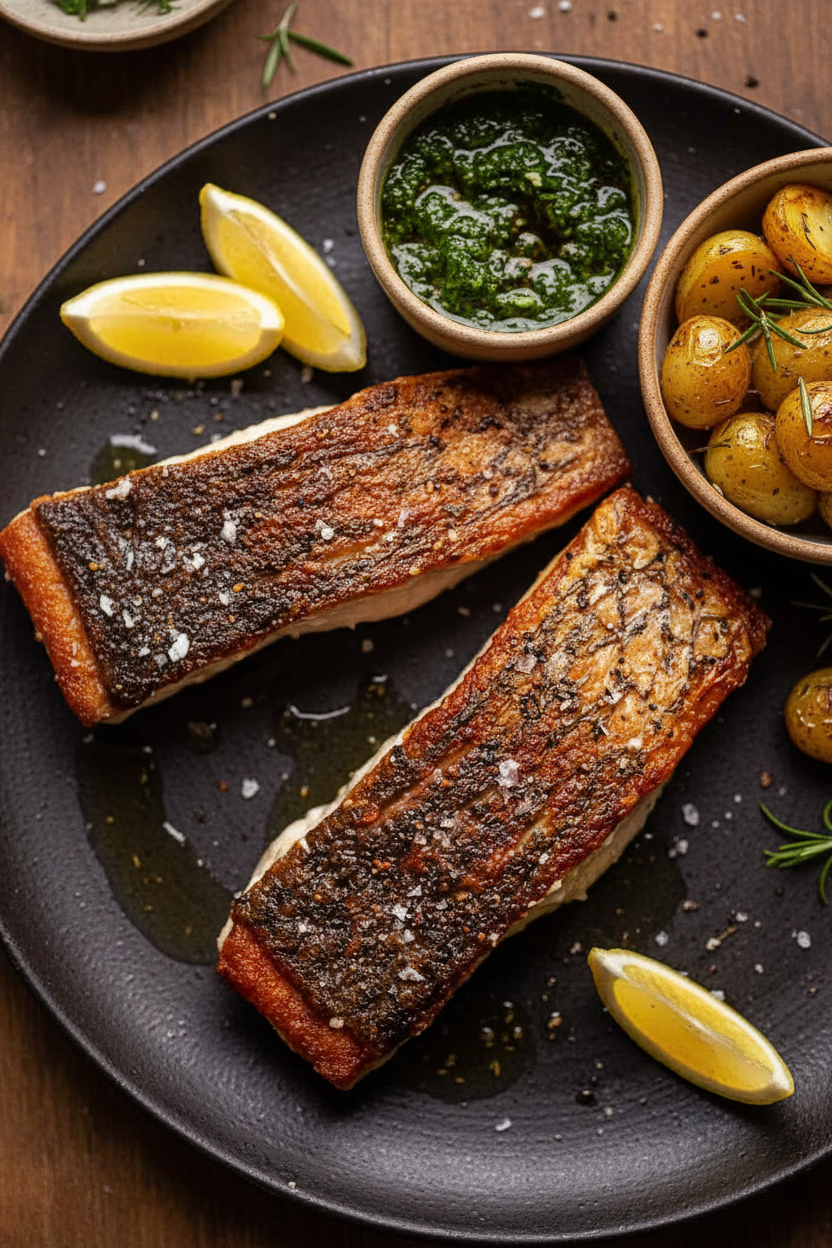
Serve the fish on a plate skin side UP. Be cautious not to pour sauces on the skin until just before serving to avoid softening it.
FAQ
What types of fish can I use for this recipe?
Suitable fish with crispy skin includes barramundi, cod, salmon, trout, and snapper. Ensure they are pin boned and descaled.
Why should I score the fish skin?
Scoring helps prevent the skin from shrinking and curling during cooking, allowing it to crisp up more effectively.
What happens if I don’t have an oven-proof pan?
If you lack an oven-proof pan, you can transfer the fish to a preheated tray for the baking stage.
How do I know when the fish is cooked?
Check the internal temperature of the fish; it should reach 55°C/131°F for optimal doneness without being overcooked.
Can I cook thin fish fillets using this method?
Yes, thin fillets can be cooked entirely on the stove and do not need to be transferred to the oven.
Conclusion
The method for cooking barramundi or similar fish fillets yields a crispy skin and perfectly cooked flesh, enhancing the overall flavor and presentation of the dish. Pairing it with the right sauces and sides will elevate your dining experience, making it both delectable and visually appealing.
French Lentil Ragout
A hearty and flavorful dish that complements the fish’s texture and adds nutritional value.
Easy no-stir Lemon Herb Risotto
Creamy and zesty, this risotto enhances the fish with a delightful lemon flavor.
Pea Puree
This vibrant green puree adds a pop of color and a fresh taste that pairs beautifully with the fish.
Creamy Mashed Cauliflower
A low-carb alternative to mashed potatoes, it offers a creamy texture that complements the fish nicely.
Creamy White Wine Sauce
A luxurious sauce that can be prepared in the same pan, enhancing the fish’s flavor profile.
Bearnaise Sauce
A classic sauce that adds richness and complexity, making the dish feel gourmet.
Garlic Butter for Fish
A simple yet flavorful addition that melts beautifully over the fish, enhancing its taste.
Lemon Butter for Fish (Beurre noisette)
A rich and slightly nutty sauce that adds depth and brightness to the dish.
Lemon Cream Sauce
A tangy and creamy sauce that adds a delightful contrast to the dish’s richness.