
Introduction
In this article, we will explore a delightful recipe that highlights the aromatic herb rosemary. With its distinct flavor and fragrance, rosemary is a versatile ingredient that can elevate a wide range of dishes. We will walk you through the steps to prepare a delicious rosemary salt that enhances your culinary creations.
Detailed Ingredients with measures
4 x 15 cm/6″ sprigs of rosemary
1/2 tsp table salt
Prep Time
10 minutes
Cook Time, Total Time, Yield
Cook Time: 2 minutes
Total Time: 12 minutes
Yield: Approximately 3 teaspoons of rosemary salt
Instructions
Start by placing a sheet of paper towel on a heatproof plate. Spread the rosemary sprigs over the paper towel and then cover them with another single sheet of paper towel. Microwave the rosemary in 4 increments of 30 seconds on high until the leaves are completely dry and can be crumbled between your fingers, while still retaining a vibrant green color. For those who prefer the oven method, you can dry the rosemary on a tray in a 100°C (fan & standard) / 210°F oven for 20 minutes, ensuring not to let it turn golden, as this will make it bitter.
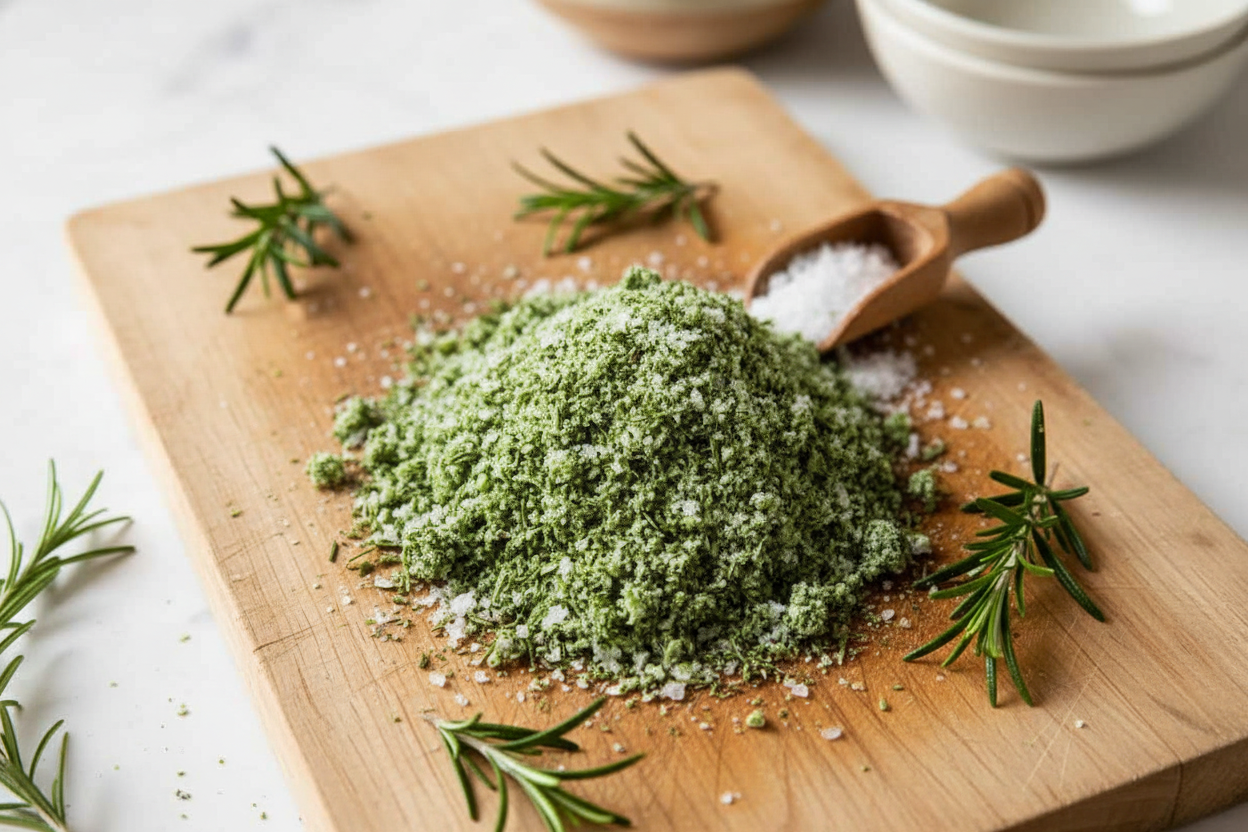
Once the rosemary is dry, grind it into a coarse powder using a mortar and pestle or even your fingers. The goal is to achieve a mixture of fine powder and some coarse bits of rosemary. Next, measure out 3 teaspoons of the rosemary powder and mix it with the table salt in a small bowl.
This homemade rosemary salt can be sprinkled on various dishes, including homemade fries, cooked proteins, and in cheese muffins or salad dressings. It is best used uncooked to avoid burning the rosemary. Finally, store the rosemary salt in an airtight container in the pantry to maintain its freshness. Enjoy the enhanced flavors that this simple yet effective ingredient brings to your meals!
Detailed Directions and Instructions
Prep
Place a sheet of paper towel on a heatproof plate. Spread the rosemary sprigs on the paper towel, then cover them with another single sheet of paper towel.
Microwave Drying
Microwave the rosemary in 4 x 30 second increments on high. Continue this process until the leaves are fully dry and can be crumbled into powder between your fingers, ensuring that they retain a lovely vibrant green color.
Grinding
Using a mortar and pestle, grind the dried rosemary into a coarse powder. You can also use your fingers for this step. Aim for a combination of fine powder and coarse rosemary bits.
Mixing
Measure out 3 teaspoons of the rosemary powder and combine it in a small bowl with the measured salt. Mix well to ensure even distribution.
Usage
Use the rosemary salt as a seasoning by sprinkling it on homemade fries, cooked proteins, or in salads. It can also replace plain salt in cheese muffins and focaccia. Note that it is best used uncooked, as rosemary is prone to burning when heated.
Storage
Store any leftover rosemary salt in an airtight container in the pantry.
Notes
Salt Type
Using table salt is recommended because its finer grains help it adhere better to foods like fries. However, any type of salt can be used according to your preference.
Oven Option
Alternatively, you can dry rosemary in an oven set to 100°C (fan & standard), equivalent to 210°F, for about 20 minutes. Be cautious not to allow the rosemary to develop any golden color, as this can make it bitter. The microwave method is preferable for safety and speed.

Cook techniques
Drying Rosemary in the Microwave
Place rosemary sprigs on a paper towel on a heatproof plate. Cover with another paper towel and microwave in 4 increments of 30 seconds on high until the leaves are fully dry, maintaining a vibrant green color.
Grinding Rosemary
Use a mortar and pestle or your fingers to grind the dried rosemary into a coarse powder. Aim for a blend of fine powder and some coarser bits for texture.
Mixing with Salt
In a small bowl, measure out 3 teaspoons of the rosemary powder and combine it with table salt for a flavorful seasoning.
Using the Rosemary Salt
Sprinkle the rosemary and salt mixture on homemade fries, cooked proteins, cheese muffins, focaccia, and salad dressings. It’s best used uncooked to avoid burning the rosemary.
Storing Rosemary Salt
Keep the rosemary salt in an airtight container in the pantry to preserve its flavor and freshness.
FAQ
Can I use any type of salt for this recipe?
Yes, while table salt is recommended for its fine grains, you can use any salt type you prefer.
What is the best method for drying rosemary?
The microwave method is the fastest and safest. Alternatively, you can dry rosemary in an oven set to 100°C (210°F) for about 20 minutes, ensuring it doesn’t turn golden.
How should I use the rosemary salt?
It’s great on homemade fries, proteins, baked goods like cheese muffins, focaccia, and salad dressings. Use it uncooked to prevent burning the rosemary.
How should I store the rosemary salt?
Store it in an airtight container in the pantry to keep it fresh and flavorful.
Conclusion
Creating a rosemary salt blend not only enhances the flavor of various dishes but also brings a delightful aroma and freshness to your meals. This aromatic seasoning can elevate simple recipes and encourage creativity in the kitchen. The vibrant green rosemary combined with the fine salt creates an essential addition to your cooking repertoire.
Roasted Vegetables
Use the rosemary salt to season a mix of your favorite roasted vegetables for an aromatic twist.
Grilled Meats
Sprinkle the rosemary salt on grilled chicken, steak, or fish for a flavorful punch.
Baked Potatoes
Add rosemary salt when baking potatoes for a fragrant and tasty side dish.
Herb-Infused Olive Oil
Mix rosemary salt into olive oil to create a delicious dipping sauce for bread.
Creamy Risotto
Incorporate rosemary salt into a creamy risotto to add depth and herbal notes.
Vegetable Soups
Use rosemary salt to season vegetable or chicken soups to enhance their flavor profiles.
Salad Seasoning
Sprinkle over salads or mixed greens for added flavor without the need for heavy dressings.
Bread Dough
Incorporate rosemary salt into bread dough for homemade bread with a hint of herbal goodness.