Introduction
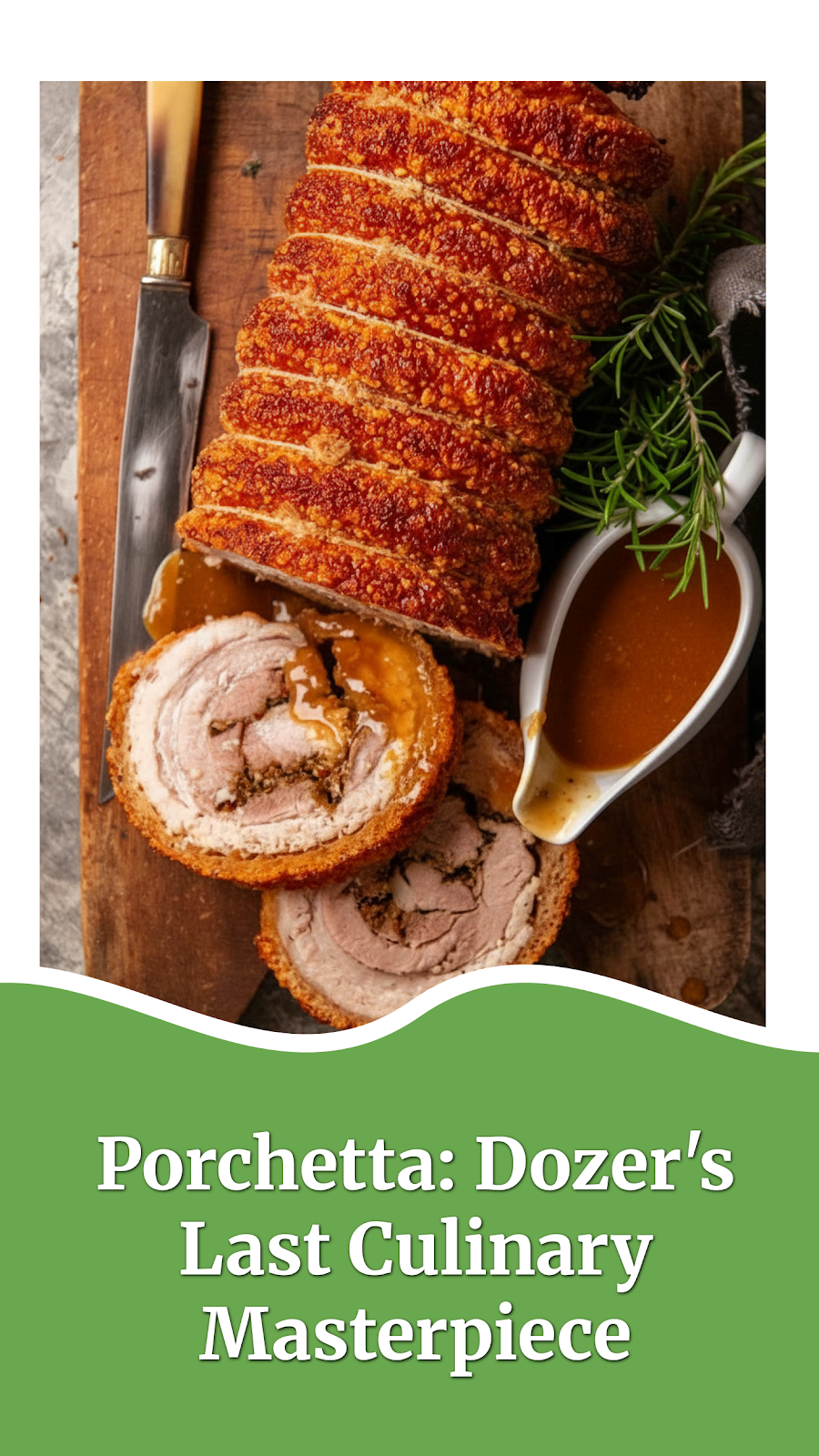
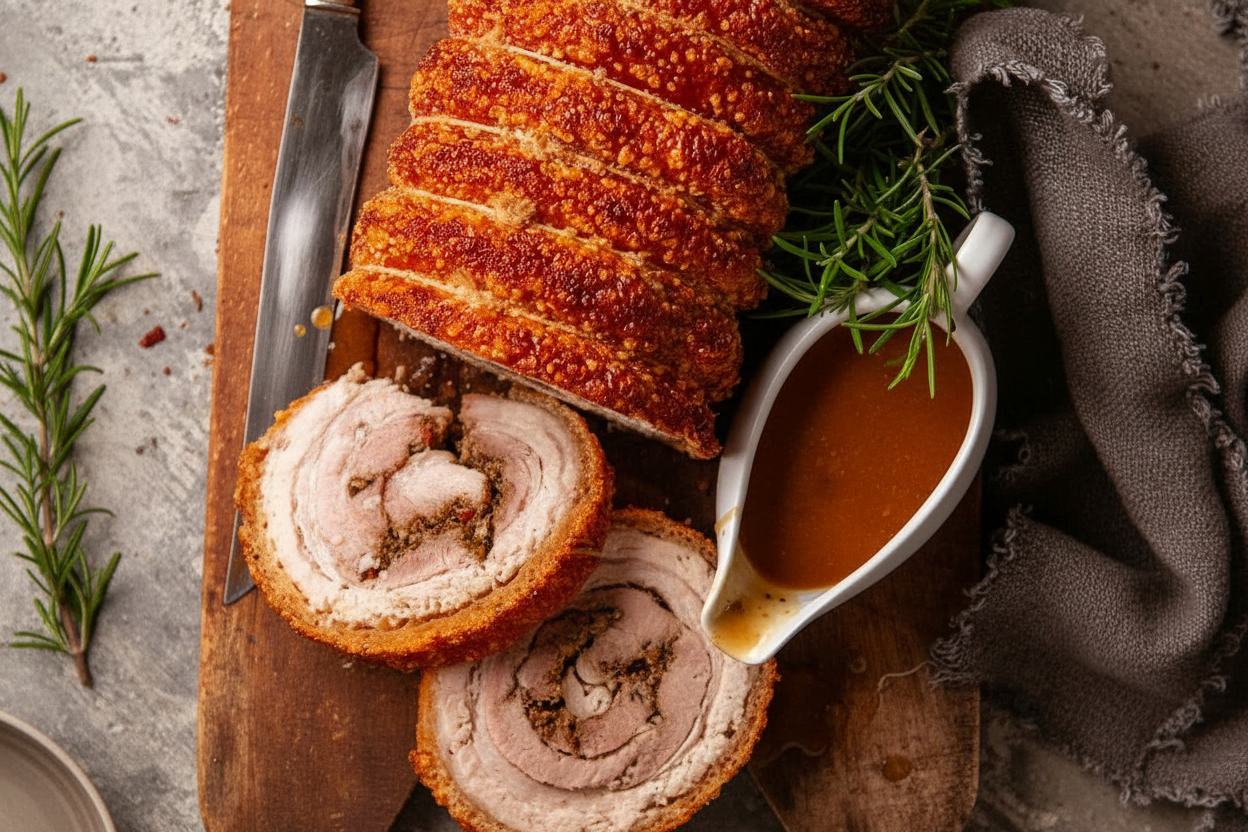
Porchetta, a delicious Italian dish renowned for its savory flavors and crispy skin, brings together the juiciness of pork belly with a fragrant rub of herbs and spices. This recipe provides a detailed guide to preparing this mouthwatering meal, ensuring you achieve perfectly crackled skin and a tantalizing gravy to accompany it.
Ingredients with Measures
Pork Belly:
2.5 kg / 5 lb pork belly with skin on, NOT SCORED
RUB:
2 tbsp fennel seeds
2 tsp black peppercorns
2 1/2 tsp cooking salt / kosher salt (halve for table salt, +50% for salt flakes)
3 tbsp finely chopped rosemary leaves (about 1/4 cup leaves)
2 tsp red chili flakes (red pepper flakes)
6 large garlic cloves, finely grated
FOR SKIN:
2 1/2 tsp cooking salt / kosher salt (halve for table salt, +50% for salt flakes)
2 tbsp olive oil, divided
GRAVY:
3 tbsp pork belly fat (reserved from roasting)
1/4 cup plain flour / all-purpose flour
2 cups water
1/4 tsp freshly ground black pepper
Salt, if needed
Prep Time
1 – 2 days to marinate
Cook Time
3 hours and 50 minutes
Total Time
Up to 2 days 3 hours and 50 minutes
Yield
Serves 8-10
Enjoy the delightful experience of creating this Porchetta, a dish that will surely impress your family and friends with its rich flavors and beautiful presentation.
Detailed Directions and Instructions
MARINATE 1 – 2 DAYS
Toast spices – Preheat a small pan over medium heat (no oil). Toast fennel seeds and black peppercorns, tossing regularly, for 1 1/2 to 2 minutes until the fennel seeds are lightly browned.
Porchetta rub – Crush fennel and peppercorns into a coarse powder using a mortar and pestle, or spice grinder. Add remaining Rub ingredients and mix with a spoon – it will be like a thick wet paste.
Trim excess meat – Pat the pork skin dry with paper towels. Cut off about ~3cm / 2.2″ meat along one long edge (leave the skin) so the pork rolls neatly. Do a mock roll-up to see how much to cut off – it’s ideal if the skin fully encloses the meat, but usually this isn’t possible. Reserve the trimmed meat.
Score the flesh – Score 3cm / 1.2″ diamonds into the flesh, taking care not to cut through the meat (~1 cm/0.4″ deep).
Rub – Use your hands to spread the Rub into the flesh side, being sure to get into the cuts you made. Also rub the extra piece of pork you trimmed off.
Tie – Place the trimmed piece of pork in the middle. Roll firmly then tie at 2.5cm/1″ intervals, starting at the centre then the ends, then working in towards. Aim for 8 equidistant ties.
Fridge 1 – 2 days – Place on a rack on a tray and refrigerate uncovered for 48 hours (24 hours is acceptable) to let the rub infuse the flesh and the skin dry to ensure good crackling. 12 hours is the bare minimum!
SLOW ROAST
Preheat oven – Preheat oven to 130°C/265°F (120°C fan-forced) with the shelf in the middle.
Oil and salt skin – Remove the rack from under the pork and wipe the tray clean. On the tray, rub the pork skin with 1 tablespoon of the oil, then sprinkle and rub in the salt evenly. Roll the pork on any salt that falls on the tray.
Slow roast – Put the pork on the rack again on a clean tray. Slow roast for 3 1/2 hours. The flesh should be tender but not falling apart, and the skin should still be soft at this stage.
Oil and increase heat – Remove the pork from the oven and increase heat to 240°C/465°F. Quickly transfer the pork still on the rack to a clean tray. Drizzle with the remaining 1 tablespoon of oil, then return it to the oven.
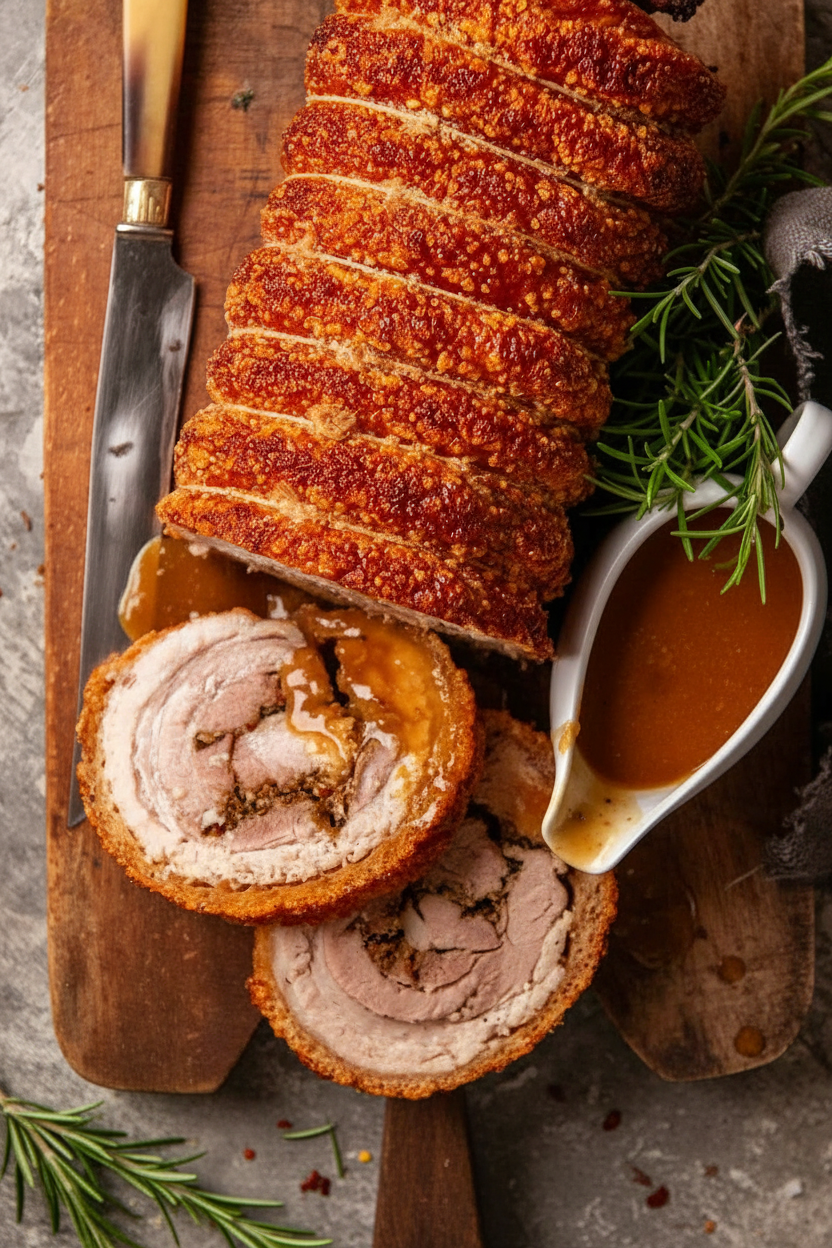
Crackle skin – Roast for 30 to 40 minutes, rotating at the 15 – 20 minute mark, until the skin is puffy and crispy all over.
Rest and carve – Remove from the oven and rest for at least 30 minutes (up to 1 hour) before cutting the strings and slicing with a serrated knife. If desired, keep warm in a low 50°C/125°F oven after resting. Serve with gravy.
GRAVY
Reserve fat – Pour all the fat from the slow-roasting tray into a jug without scraping the tray.
Deglaze tray – Pour 1/2 cup of water onto the tray set on a stove over medium heat. When the water simmers, use a rubber spatula to loosen all bits stuck on the tray. If using an induction stove, use boiling water instead to deglaze.
Make gravy – In a large saucepan, measure out 3 tablespoons of the reserved fat and heat on medium high. Add flour and stir for 1 minute. Whisk in the deglazing water and the remaining water along with pepper. Simmer for 2 minutes or until it thickens. Taste and add salt if necessary. Serve with pork.
Notes
Note 1
Use pork belly with skin on for the best results; ensure it is not scored.
Note 2
Adjust salt measurement depending on the type of salt used.
Note 3
If using dried rosemary, remember to reduce the amount.
Note 4
For rolling tips, ensure that the skin can fully wrap around the meat as best as possible.
Note 5
Make sure the oven shelf is in the middle for even cooking.
Cook techniques
Marinating the Pork
Toast fennel seeds and black peppercorns in a dry pan before crushing them into a coarse powder. Combine with other rub ingredients to create a paste and apply it under the pork skin. Let it marinate in the refrigerator for 24 to 48 hours to enhance the flavors.
Scoring the Skin
Score the pork skin in a diamond pattern to help the fat render during cooking and to create a crispy finish.
Slow Roasting
Roast the pork belly slowly at a low temperature (130°C/265°F) for 3.5 hours. This ensures the meat becomes tender without falling apart, while the skin remains soft.
Crackling the Skin
After slow roasting, increase the oven temperature to 240°C/465°F and roast the pork for an additional 30 to 40 minutes. This step makes the skin puff up and become crispy.
Making Gravy
Reserve the fat from the roasting tray, deglaze it with water, and combine with flour to create a thick gravy. Simmer until thickened and serve alongside the pork.
FAQ
Can I score the pork belly skin in different patterns?
Yes, you can score the skin in different designs, but ensure that the cuts are deep enough to render fat but not cut through the meat.
How long should I let the pork rest after roasting?
It is advisable to let the pork rest for at least 30 minutes to 1 hour before slicing to retain juices.
Can I use different herbs in the rub?
Certainly! You can experiment with other herbs like thyme or sage, but adjust the quantities to your taste.
What should I do if the skin does not crackle properly?
Make sure the skin is thoroughly dry before applying salt and oil. If it still doesn’t crackle, you can place it under a broiler for a few minutes while watching closely.
How do I store leftover pork belly?
Store leftover pork belly in an airtight container in the refrigerator for up to three days. Reheat before serving to maintain texture.
Conclusion
The slow-roasted pork belly crafted with a aromatic rub not only delivers an explosion of flavors but also provides a delightful texture contrast between the tender meat and crispy skin. Perfect for a hearty meal, this dish can be enjoyed on special occasions or whenever you wish to impress your guests.
Herbed Chicken Thighs
A succulent chicken dish marinated in rosemary, garlic, and olive oil, served with a side of roasted vegetables.
Spicy Pork Tacos
Shredded spicy pork belly served in warm tortillas, topped with fresh cilantro, diced onions, and lime juice.
Garlic and Herb Roasted Potatoes
Crispy roasted potatoes seasoned with garlic, rosemary, and olive oil, making a perfect accompaniment to any roasted meat.
Traditional Ratatouille
A rich medley of eggplant, zucchini, and bell peppers stewed in olive oil with herbs, providing a flavorful and healthy side.
Crispy Brussels Sprouts
Brussels sprouts roasted to perfection, tossed with olive oil, salt, and red chili flakes for an added kick.
Apple and Fennel Slaw
A refreshing slaw combining crisp apples, fennel, and a light dressing, making a perfect side to cut through the richness of pork belly.
Grilled Vegetable Skewers
Skewers of seasonal vegetables marinated in olive oil and herbs, grilled until charred and flavorful, perfect for summer barbecues.