Introduction
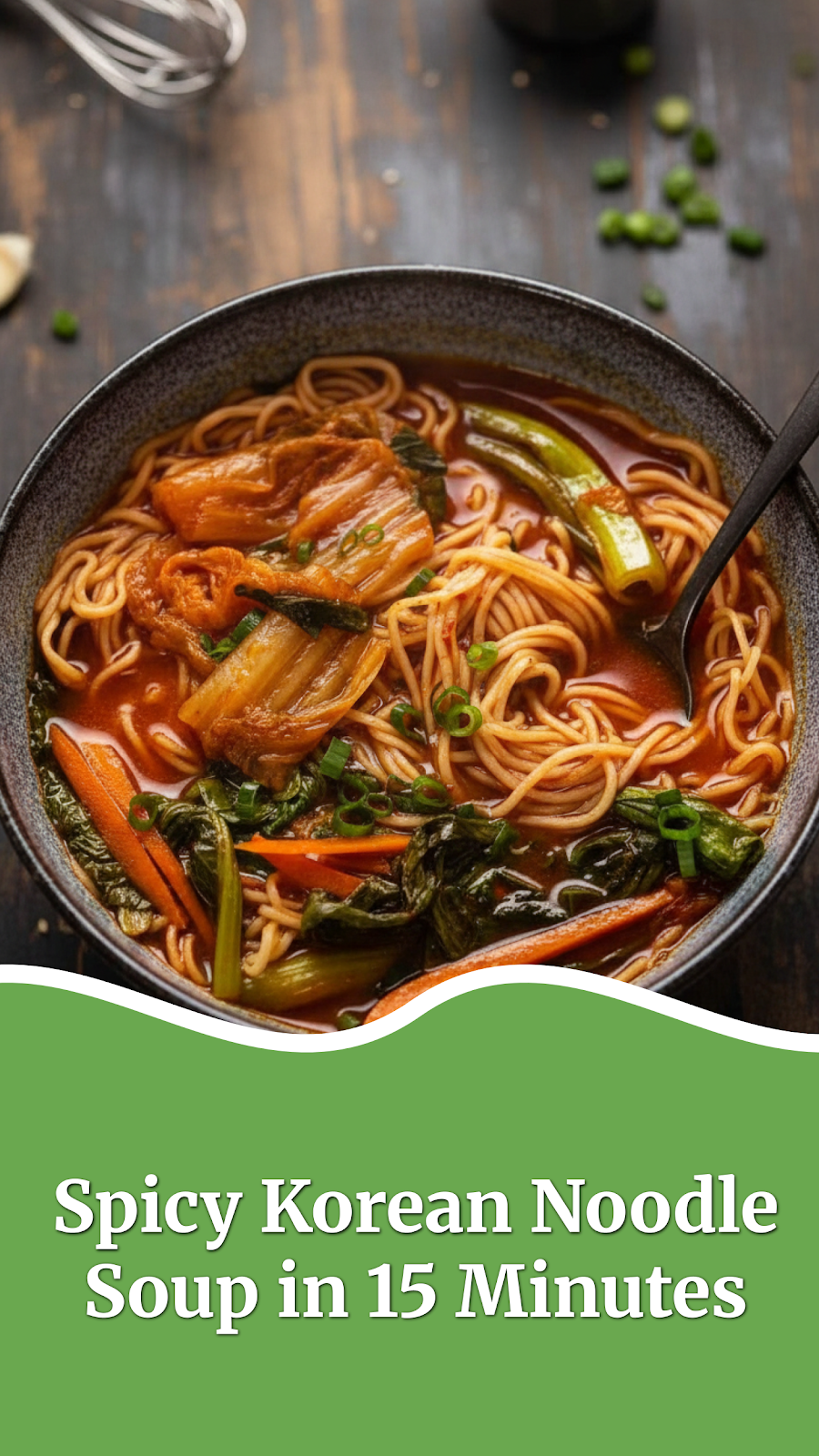
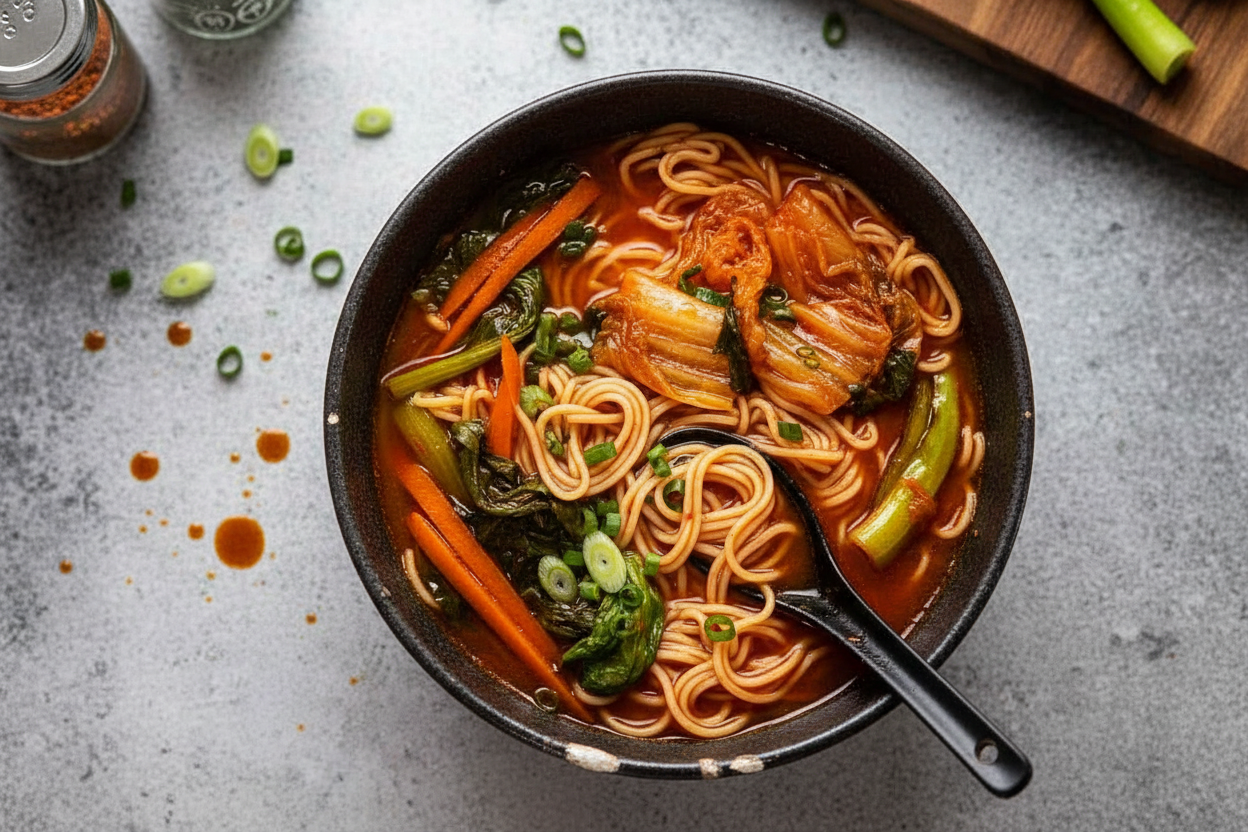
Spicy Korean soup broth is a comforting and flavorful dish that brings a taste of Korea to your kitchen. Packed with robust ingredients and perfect for those who love a little heat, this broth is ideal for chilly days or anytime you’re craving something nourishing. With the right mix of spices, vegetables, and noodles, you can easily create a delicious bowl of goodness.
Detailed Ingredients with measures
4 cups / 1 litre chicken stock/broth, low-sodium
2/3 cup cabbage kimchi
2 tbsp kimchi juice, from kimchi tub
3 tbsp gochujang
2 tbsp light soy sauce
2 tsp fish sauce (you can substitute with more soy)
1 tbsp Chinese cooking wine (Shaoxing wine)
2 slices ginger, sliced 0.7cm / 1/3″ thick (skin on)
1 large garlic clove, smashed
Add-ins:
200g/7oz thin fresh egg noodles (or 100g/3.5oz dried)
4 stems choi sum or other Asian greens, cut into 7cm / 2.5″ lengths, with stems separated from leafy part
1 small carrot, peeled, cut into thin matchsticks
2½ tsp sesame oil, toasted
1/4 cup finely sliced green onions (1 stem)
Prep Time
10 minutes
Cook Time
15 minutes
Total Time
25 minutes
Yield
Serves 4
Enjoy this flavorful Spicy Korean Soup Broth as a hearty meal, perfect for a gathering or a cozy night in. Customize the ingredients to suit your taste preferences and enjoy the vibrant flavors that come together in every bowl!
Detailed Directions and Instructions
Broth Preparation
Place all broth ingredients (chicken stock, kimchi, kimchi juice, gochujang, light soy sauce, fish sauce, Chinese cooking wine, ginger, and garlic) in a saucepan. Bring the mixture to a simmer over medium-high heat. Once it reaches a simmer, reduce the heat to maintain a gentle simmer. Allow the broth to simmer for 10 minutes without a lid.
Cooking Vegetables
Add choi sum stems and carrot to the simmering broth. Continue to simmer for 2 minutes. Then, add the choi sum leaves and simmer for an additional minute. Just before serving, stir in the toasted sesame oil.
Noodle Preparation
While the broth and vegetables are cooking, prepare the egg noodles according to the package instructions in a separate pot of boiling water. Once cooked, drain the noodles and give them a quick rinse under tap water to remove excess starch. Shake off any remaining water.
Assembling the Dish
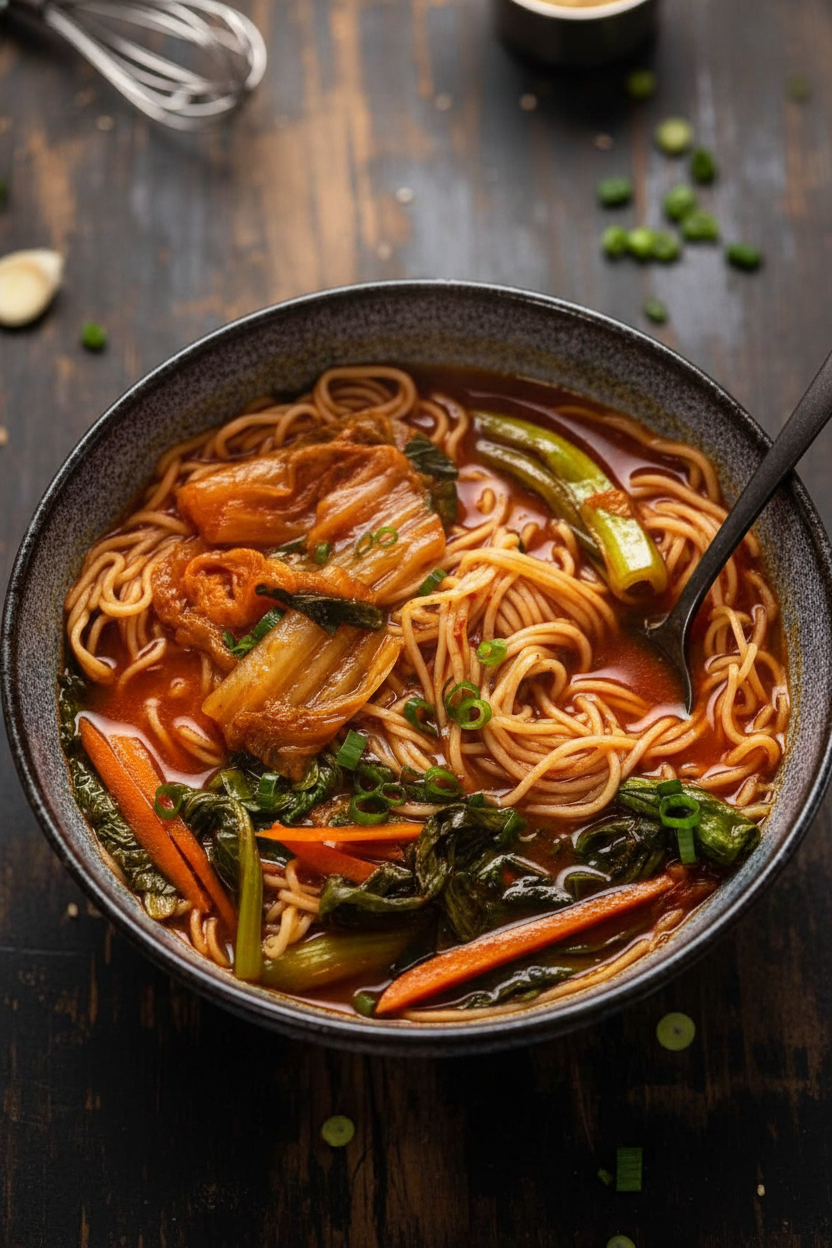
To assemble, divide the cooked noodles between bowls. Top the noodles with the cooked vegetables. Carefully remove the garlic and ginger slices from the broth, then pour the broth over the noodles and vegetables in each bowl. Finish by sprinkling the finely sliced green onions on top and serve hot.
Notes
Note 1
Kimchi is a traditional Korean pickle made from fermented vegetables packed with a tangy, spicy juice. It is generally available in the refrigerated section of large grocery stores or Asian markets. To extract the juice, simply squeeze it from the cabbage using a spoon.
Note 2
Gochujang is a spicy Korean paste made from rice and beans that is rich in flavor. It is essential for various Korean dishes, including those in my cookbook such as Korean BBQ Beef Short Ribs.
Note 3
For soy sauce, use light or all-purpose soy sauce as dark soy sauce is too strong for this recipe.
Note 4
Chinese cooking wine can be substituted with mirin or dry sherry. For a non-alcoholic alternative, use an additional 1½ teaspoons of fish sauce.
Note 5
To smash garlic, place the side of a knife on the garlic clove and apply pressure with your hand to burst it open while keeping it mostly intact.
Note 6
You can use any type of noodles in this recipe, including vermicelli or lo mein noodles.
Note 7
Feel free to customize the vegetables based on your preferences or what you have on hand.
Note 8
Toasted sesame oil is brown and has a more robust flavor compared to untoasted, which is typically yellow. In Australia, the default sesame oil available is toasted, while untoasted can be harder to find.
Leftovers
Store the broth and noodles separately in the refrigerator for up to 3 days. Reheat them separately before combining to serve.
Cook techniques
Simmering the Broth
Place all the broth ingredients in a saucepan. Bring to a simmer over medium-high heat, then reduce to a gentle simmer for 10 minutes without a lid.
Cooking Vegetables
Add choi sum stems and carrot to the simmering broth and cook for 2 minutes. Then add choi sum leaves and simmer for another minute. Stir in sesame oil right before serving.
Preparing Noodles
Cook the egg noodles in boiling water according to package instructions. After cooking, drain and quickly rinse under tap water to stop the cooking process, then shake off excess water.
Assembling the Dish
Divide the cooked noodles into bowls. Add the cooked vegetables on top. Remove the garlic and ginger from the broth, then pour the broth over the noodles. Finally, sprinkle with green onions before serving.
FAQ
Can I substitute the chicken broth with vegetable broth?
Yes, you can use vegetable broth for a vegetarian version of the soup.
What can I use instead of gochujang?
If you don’t have gochujang, you can use a combination of red chili paste and a bit of sugar, but the flavor will differ.
How can I make the soup less spicy?
To reduce the spiciness, you can decrease the amount of gochujang and add less kimchi.
Can I add other vegetables to the soup?
Absolutely! Feel free to customize the soup with your choice of vegetables, such as bell peppers, spinach, or mushrooms.
How do I store leftovers?
Store the broth and noodles separately in the refrigerator for up to 3 days. Reheat them separately before assembling the dish again.
Conclusion
This spicy Korean soup broth is a delightful and comforting dish that combines the unique flavors of kimchi, gochujang, and various fresh ingredients. The combination of spicy, savory, and tangy elements creates a warm and satisfying meal that can easily be customized with different add-ins to suit personal preferences.
Vegetarian Option
Replace chicken stock with vegetable broth and use tofu or more vegetables like mushrooms and spinach for a hearty vegetarian version.
Seafood Addition
Incorporate shrimp, fish fillets, or calamari for a seafood twist, enhancing the broth’s flavor and richness.
Substitutes for Noodles
Experiment with rice noodles, gluten-free noodles, or even zoodles (zucchini noodles) to cater to different dietary needs.
Spicy Level Variation
Adjust the amount of gochujang and add fresh chili peppers or chili flakes for those who enjoy a spicier kick.
Extra Toppings
Enhance your soup with toppings such as a soft-boiled egg, nori strips, or toasted sesame seeds for added texture and flavor.
Serving Suggestions
Pair the soup with a side of steamed rice, pickled vegetables, or Korean-style pancakes for a complete meal experience.